
Sonam Wangchuk Warns Sri Lanka And Bangladesh Style Unrest Happens When Protests Are Blocked
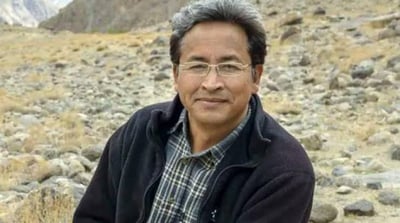
Climate campaigner and education reformer Sonam Wangchuk has delivered a sharp warning to the government, saying that crushing peaceful demonstrations can lead to dangerous national unrest. Speaking on public dissent and civil liberties, the Ladakhi activist stated that peaceful public protests are a vital mechanism that helps rulers understand real problems and improve how they run the country. He cautioned that when peaceful voices are blocked by police force, countries risk facing massive popular revolts similar to the recent chaos witnessed in Sri Lanka and Bangladesh.
The remarks come in the wake of strict police action against demonstrators taking part in the anti-SIR agitation. Demonstrators who had taken to the streets to express their anger over government policies were stopped by law enforcement authorities, leading to arrests and detentions. Critics and civic rights defenders have condemned the harsh police measures, pointing out that peaceful demonstration is a basic democratic right guaranteed to every Indian under the Constitution.
Addressing an event in New Delhi on 24 October 2026, Wangchuk explained that no administration is perfect and that public demonstrations act as an essential safety valve in any democratic nation. When citizens encounter issues with official policies, taking to the streets allows them to bring their pain to the notice of leaders without violence. But when governments turn deaf ears to public complaints and use police power to suppress dissenting voices, the public anger does not vanish. Instead, the frustration stays hidden beneath the surface until it explodes into an uncontrollable national revolt.
To illustrate his point, the activist highlighted the deep political crises that recently shook India's immediate neighborhood. In Sri Lanka, economic distress and the refusal of rulers to hear common citizens eventually pushed millions of people onto the streets, forcing top leaders to leave their offices in panic. Similarly, in Bangladesh, heavy handed attempts to silence student demonstrations and civic protests triggered a historic uprising that completely removed the ruling government from power. These historical examples, he noted, show clearly that force cannot permanently suppress the genuine will of the public.
Wangchuk, who has spent months organizing non-violent hunger strikes and peace marches for the environmental protection of Ladakh, has himself faced direct police resistance. His foot march from Ladakh to New Delhi saw peaceful volunteers stopped at state borders, placed under police custody, and denied basic permission to assemble at public places. Despite sticking strictly to peaceful methods inspired by Mahatma Gandhi, the organizers found themselves treated with severe administrative suspicion and security barriers.
Legal experts and civil society leaders share similar concerns regarding how protests are managed across the country. Over recent years, obtaining police permissions for peaceful marches has become nearly impossible for student bodies, farmer unions, environmentalists, and neighborhood groups. Public spaces where citizens once stood with banners are routinely blocked with heavy barricades, internet shutdowns, and prohibitory orders that make peaceful assembly impossible.
Government officials generally defend these strict curbs by citing traffic problems, threats to public order, and the fear of violence. However, civil rights advocates argue that maintaining public peace should never mean the complete ban of peaceful dissent. They point out that a healthy democracy does not fear its own people, and shutting down democratic channels only widens the gap between the rulers and the ruled.
The powerful message from Wangchuk serves as a direct wake-up call for authorities dealing with public agitations. Suppressing dissent through police power may provide temporary silence on the streets, but it builds long-term public resentment that damages national stability. For true peace and progress, listening to honest public protests and addressing citizen grievances will always be far safer than forcing silence at the point of a baton.