
OpenAI Screenless Smart Speaker Details Leak Revealing A New Era Of Always Present AI Companions
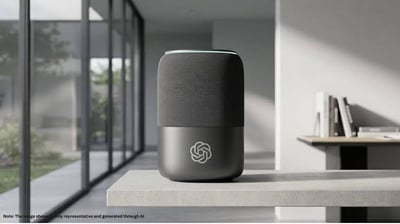
The consumer technology landscape is experiencing a massive shift as artificial intelligence moves rapidly from software applications into custom physical hardware. Tech industry intelligence reports indicate that OpenAI is actively developing its very first dedicated consumer electronic product, designed to establish an entirely new category of home computing. Breaking away from early industry rumors that predicted a high end smartphone replacement, the company is preparing a portable, screenless smart speaker that operates as a proactive, humanlike companion. This ambitious project is heavily guided by legendary former Apple designers from Jony Ive design firm LoveFrom, signaling a massive push to create an interconnected physical hardware ecosystem. With an expected official product preview scheduled for the late 2026 timeline and commercial retail availability slated for early 2027, this device is built to move AI out of mobile phone screens and embed it directly into the physical layout of everyday household environments.
Unlike traditional smart assistants from Amazon, Apple, and Google that remain purely reactive to explicit user voice commands, OpenAI is engineering its hardware to be remarkably predictive. The device features built-in cameras, advanced environmental sensors, and a fully integrated rechargeable battery pack that allows users to easily carry the lightweight chassis from room to room. Operating on the newly introduced GPT Live audio infrastructure, the system can handle complex multi turn conversations, listen continuously while simultaneously speaking, and fluidly adjust its tone mid sentence. Most fascinating are the unique mechanical elements built directly into the housing that allow specific physical components to shift and move independently on their own. This movement creates an animated, lifelike presence inside the home, transforming the device from a static plastic box into a dynamic, attentive entity that visually reacts to the presence of family members.
A critical analysis of this hardware strategy shows that OpenAI is making a highly aggressive but risky play to dominate personal user data streams. By designing a speaker that lacks a screen, the company forces consumers to rely entirely on highly natural voice reasoning, effectively bypassing the dominant mobile app storefronts controlled by Apple and Google. To deliver true day to day utility, the device requires extensive permission to crawl through a user private digital footprint, including personal emails, historical calendar schedules, and smart home appliance networks. While this deep integration enables the companion to smartly anticipate individual household needs—such as offering a quick cooking tip before a driver even asks—having an always active microphone and video lens continuously recording domestic spaces raises intense privacy concerns regarding data storage, user consent, and security boundaries.
The sudden arrival of this intelligent hardware product will inevitably trigger a fierce legal and commercial battle across the international tech sector. The project has already collided heavily with established industry players, leading to a massive trade secret lawsuit filed by Apple in July 2026 over alleged technology misappropriation, which could potentially disrupt or delay the final commercial launch timeline. Despite these legal frictions, the projected consumer price point of 200 to 300 US dollars indicates that OpenAI wants to make this device highly accessible to mass market buyers globally. The ultimate success of this screenless companion will depend heavily on the ability of the development teams to build ironclad privacy firewalls that assure users their private homes are completely safe from intrusive surveillance. If OpenAI can successfully blend this physical animation with flawless, secure digital execution, they will establish the definitive standard for the next era of personal ambient intelligence.