
Opposition Rebuffs PM Late Night Video And Proposed Fast Track Court Law
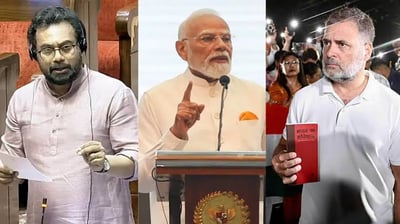
Political tension escalated inside Parliament on 25 July 2026 as major opposition parties firmly rejected Prime Minister Narendra Modi late night video address and the government proposed legislation to set up fast track courts for competitive examination paper leaks. The political standoff follows days of continuous parliamentary disruptions and widespread nationwide student demonstrations concerning alleged irregularities in national entrance tests like NEET UG 2026. In a self-recorded video message shared on social media late Thursday night, the Prime Minister announced that the Union Cabinet cleared draft legislation providing for special fast track courts and strict legal penalties to fast-track trials against individuals involved in examination fraud. However, leaders across the opposition bloc dismissed the late night video message as a delayed public relations exercise, reiterating that parliamentary normalcy cannot resume without immediate political accountability.
Congress leader Rahul Gandhi launched a direct political attack against the Prime Minister following the midnight video statement, arguing that the administration failed to address the primary grievance of millions of struggling students across India. Expressing solidarity with young candidates protesting at various urban venues, Rahul Gandhi stated that students are demanding the immediate removal of Union Education Minister Dharmendra Pradhan rather than political videos. Congress President Mallikarjun Kharge supported this stance, confirming that opposition parties remain willing to engage in a comprehensive parliamentary debate on systemic educational reforms only after the education minister steps down from his post. Senior Congress spokesperson Jairam Ramesh further described the proposed bill as an attempt to show fake responsiveness, highlighting that fast track courts can easily be established under existing laws like the Public Examinations Prevention of Unfair Means Act 2024.
Other major constituents of the INDIA opposition coalition joined the criticism, questioning the timing and genuine intent behind the government proposed legislative measure. Trinamool Congress Member of Parliament Sagarika Ghose mocked the late night video, describing it as an inadequate gesture released long after public outrage reached a boiling point. Leaders from the Communist Party of India Marxist emphasized that the central issue is not a shortage of laws, but a total absence of executive intent to prosecute influential figures behind recurring paper leaks over the past 12 years. Despite opposition skepticism, the Delhi High Court moved rapidly on 25 July 2026 to designate a special fast track court at Rouse Avenue Courts under existing statutes to ensure swift adjudication of public examination offences, further fueling opposition claims that fresh legislation is unnecessary.
The political showdown is expected to intensify when Parliament resumes its sitting, as opposition leaders prepare to meet and coordinate their strategy ahead of the bill formal introduction. Political strategists note that the ruling government intends to project any parliamentary obstruction of the fast track court bill as an anti-reform stance by opposition parties. Meanwhile, regional leaders including Trinamool Congress chief Mamata Banerjee announced plans to meet protesting students at Jantar Mantar to demonstrate solidarity. The persistent deadlock illustrates a deep institutional rift, where government attempts to offer procedural legal solutions clash directly with opposition demands for immediate executive resignations, leaving the future of millions of young examinees hanging in political uncertainty.