
Rahul Gandhi says PM Modi must apologise as fight will go on after education minister resigns
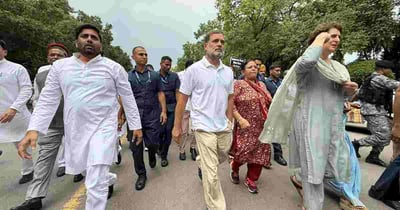
The political atmosphere in New Delhi reached a historic high point on 25 July 2026 when Union Education Minister Dharmendra Pradhan officially submitted his resignation to the Prime Minister. For weeks, young students across India had taken to the streets in massive numbers, demanding accountability for repeated examination paper leaks and systemic failures. Standing outside Parliament, Congress leader and Leader of Opposition in Lok Sabha, Rahul Gandhi, addressed the media with a clear and uncompromising stance. While welcoming the resignation as a significant victory for the youth of the country, he emphasized that the struggle was far from complete. Rahul Gandhi stated that Prime Minister Narendra Modi must personally tender an apology to millions of students for the harsh police crackdown on peaceful student demonstrations. The striking visual images of young citizens facing batons and water cannons during their peaceful protests had created strong emotional waves across Indian households, elevating an administrative exam failure into a major moral debate.
The series of events that led to this intense political standoff began earlier in July 2026, when serious allegations of paper leaks in national competitive examinations like NEET came to light. Thousands of students, supported by youth organizations such as the Cockroach Janta Party, staged continuous peaceful demonstrations at Jantar Mantar and near key government buildings. On 21 July 2026, tensions escalated drastically when police forces used physical force and lathicharge to clear the gathering of young aspirants in the national capital. Reacting to the force used against youth, Rahul Gandhi and several opposition leaders staged a dramatic protest near the official residence of the Prime Minister, wearing symbolic armbands and raising slogans demanding immediate justice. Opposition parties pointed out that when millions of middle class families spend up to 1.32 lakh crore rupees collectively on preparing their children for exams, paper leaks do not just destroy individual careers but ruin family finances.
As public anger continued to grow over 5 consecutive days, the central government tried to manage the fallout. Late at night on 24 July 2026, Prime Minister Narendra Modi released a video message promising strict laws against paper leaks in the ongoing Monsoon Session of Parliament. However, Rahul Gandhi quickly rejected the message, calling it an attempt to dodge real questions and stating that a late night video could not replace direct accountability on the floor of the House. By the afternoon of 25 July 2026, Dharmendra Pradhan submitted his resignation, stating in a 2 page letter that he took moral responsibility for the situation and wished to protect the academic future of students. Despite this exit, Rahul Gandhi reminded the nation that 2 vital demands remained completely unfulfilled: a direct public apology from Prime Minister Narendra Modi to the country's youth, and the immediate withdrawal of all police cases registered against protesting students.
Taking a broader view of the entire development reveals deep structural challenges within the Indian education ecosystem. Over the last decade, repeated exam cancellations and leaks have disrupted the lives of over 75 million students across various states. While a minister resigning offers immediate political relief, it does not automatically fix the broken examination machinery or restore public trust in testing agencies. By keeping the focus on top leadership accountability, the opposition is attempting to force a fundamental change in how national examinations are secured and conducted. At the same time, the government faces the massive task of convincing young voters that future entrance exams will be conducted with total honesty and zero compromise.
In the end, this movement demonstrates how united youth action can influence national politics in a vibrant democracy. When students stand firm for their educational rights, political institutions are compelled to take visible corrective action. As Parliament resumes its proceedings, all attention remains focused on whether the government will allow a dedicated debate on the floor of Lok Sabha regarding the exam system. The coming weeks will determine whether this moment marks the beginning of genuine structural reforms in education or remains a subject of ongoing political friction.