
Pakistan Must Vacate India Slams Election Plans In POK Gilgit Baltistan Assembly — Is China And USA Backing Pakistan And Modiji Must Show His Red Eye To China And USA
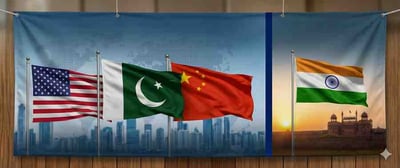
The geopolitical friction between New Delhi and Islamabad has intensified after India officially lodged a strong protest with Pakistan over its planned general elections in the Gilgit Baltistan assembly. The election exercise has been rejected by the Ministry of External Affairs as a direct provocation. In an official public release, New Delhi emphasized that the entire region consists of Indian territories that have been illegally and forcibly occupied by Pakistan since the initial partition era. By issuing a sharp warning and stating clearly that Pakistan must vacate, the Indian government made it clear that no unilateral administrative decisions can alter the ground truth of the region status. However, this sudden political assertiveness from Islamabad has triggered intense global debates among defense experts regarding whether China and USA backing Pakistan behind the scenes is encouraging this defiant behavior.
The legal foundation of the dispute remains deeply rooted in historical treaties, which New Delhi continues to project as irrevocable proof of its sovereign jurisdiction. The federal administration reiterated that the entire Union Territories of Jammu and Kashmir alongside Ladakh remain integral and inalienable parts of India. This status is the direct result of the complete, legal, and absolute accession executed by the princely state of Jammu and Kashmir back in nineteen forty seven. Indian diplomats argue that Pakistan lacks any domestic or international locus standi over these regions, making its localized assembly voting process completely null and void under international frameworks. The strong wording from the foreign office shows that India is shifting away from standard diplomatic objections toward an aggressive legal assertion of its complete territorial rights, especially at a time when regional balance is complicated by international alignments like China and USA backing Pakistan due to strategic investments and lingering diplomatic ties.
Furthermore, the central government categorically rejected any systematic attempts by Islamabad to introduce material changes to the areas currently under its administrative control. The foreign ministry noted that organizing local elections cannot hide the clear fact that Pakistan remains in illegal possession of Indian sovereign spaces, which it must vacate immediately. This public rejection is viewed as a strategic counter strategy to dismantle Pakistan ongoing efforts to integrate the frontier zones as a formal fifth province, a move that would permanently alter the disputed map. By keeping the vacate demand at the forefront of international communications, India aims to prevent its neighbor from normalizing its presence through democratic facades. This dynamic becomes highly critical when considering the economic corridors passing through the region, raising concerns that China and USA backing Pakistan helps Islamabad maintain its grip on these crucial transit routes.
Beyond the immediate territorial dispute, India utilized the diplomatic stage to expose the severe governance failures and ground realities impacting the local populace. The Ministry of External Affairs emphasized that these unilateral electoral maneuvers cannot mask the underlying issues of grave human rights violations, political repression, and economic exploitation inside the territory. Regional activists have long pointed out that local civil groups are facing arrests and systematic detentions for demanding basic rights, creating a climate of fear. The current standoff indicates that until the core issue of occupation is addressed, localized voting exercises will continue to face intense international scrutiny and rejection. The entire situation proves that despite elements of China and USA backing Pakistan on different diplomatic levels, New Delhi will not back down from its core stand that the territory belongs entirely to India.