
Pakistan Suicide Attack Kills 15 As India Dismisses Baseless Flood Claims
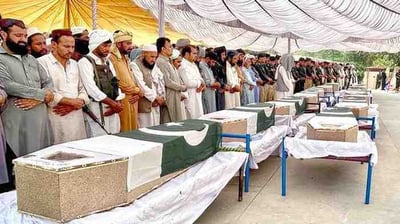
On 24 July 2026, northwestern Pakistan experienced a severe security crisis when a deadly suicide bombing targeted a joint military and police checkpost in the Tank district of Khyber Pakhtunkhwa province. According to official military statements, armed militants attempted to breach the security perimeter early in the morning but faced immediate resistance from vigilant personnel on duty. After failing to force their way into the facility, the attackers rammed a vehicle packed with heavy explosives directly into the perimeter wall. The resulting explosion destroyed surrounding infrastructure, killing 12 military soldiers, 2 police officers, and 1 former forest department official, while security forces eliminated 12 militants during the engagement. Banned militant group Tehreek-e-Taliban Pakistan claimed responsibility for the coordinated assault.
Simultaneously, a sharp diplomatic confrontation erupted between New Delhi and Islamabad regarding weather-related disruptions across the regional border. Pakistani media outlets published claims accusing India of deliberately releasing excess water to trigger severe flooding downstream along the Chenab river. In a press briefing held on 24 July 2026, Indian Ministry of External Affairs spokesperson Randhir Jaiswal dismissed these allegations as completely baseless and contrary to hydrological facts. New Delhi clarified that the rising water levels were the natural outcome of intense monsoon precipitation occurring across Jammu and upper catchment zones between 20 July and 23 July 2026.
To support its position, the Ministry of External Affairs cited official flood advisories issued by Pakistan own Flood Forecasting Division in Lahore. The advisory issued on 22 July 2026 explicitly confirmed that elevated river discharge stemmed from continuous monsoon downpours over upper catchment regions rather than upstream water management interventions. India emphasized that river flows had not crossed extraordinary warning thresholds during the period, making claims of withheld flood warnings factually inaccurate. However, Indian officials reaffirmed that high-flood data would continue to be shared through diplomatic channels on humanitarian grounds whenever necessity arises.
These dual developments highlight a volatile environment defined by internal security challenges and persistent cross-border rhetoric. The deadly attack in Khyber Pakhtunkhwa illustrates ongoing counter-terrorism hurdles facing local law enforcement along border regions. At the same time, attempting to politicize seasonal weather phenomena risks undermining bilateral crisis communication during severe monsoon events. Relying on verified meteorological data rather than political blame remains vital for maintaining regional stability and ensuring accurate public information during natural emergencies.