
PHP Security Flaws Trigger Global Warning From World Leaders Over Web Vulnerabilities
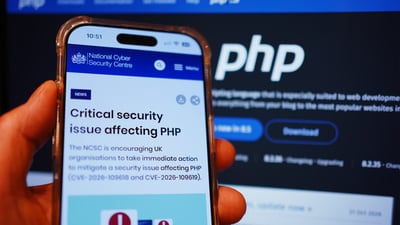
A major digital security crisis has hit the internet after intelligence agencies and government officials issued urgent warnings about dangerous weaknesses found in the PHP programming language. The open source code serves as the core engine for more than seventy percent of all websites across the globe. Because so much of the digital economy depends on this single system, government departments in Europe, Asia, and North America took many public portals offline to prevent bad actors from breaking into sensitive databases.
The two newly discovered security holes, nicknamed PHP2Shell, received a critical danger rating of 9.2 out of 10 from cybersecurity specialists. Security experts revealed that the bugs remained buried deep inside the computer code for more than a decade without being caught by human reviewers. Advanced artificial intelligence tools managed to scan the massive code library and identify the exact points where memory and error handling fail, opening a digital backdoor.
The United States National Security Agency took the rare step of releasing a public warning, urging website managers to shut down their platforms immediately if they cannot install safety updates straight away. In Britain, cybersecurity officials sent out tens of thousands of urgent alerts to organizations whose digital systems were wide open to attack. Government portals across Canada, France, the Netherlands, and Germany were also taken offline as technical teams worked around the clock to block potential intrusions.
The technical problem sits directly in the core engine where computers handle memory and manage system errors. When a website processes everyday user requests, these hidden errors can cause memory corruption. If exploited by malicious hackers, the flaw allows remote code execution, giving an outside intruder complete control over the underlying server. This means attackers could read private user passwords, steal proprietary customer databases, install dangerous malware, or change website content at will.
Researchers explained that the widespread reach of PHP is what makes this discovery so alarming. Popular website creation platforms, digital publishing tools, online stores, and major educational resources rely heavily on the language to show pages to everyday users. When a basic language used by millions of platforms has a major hole, every single website built on that framework becomes a target for automated attack scripts.
The discoveries were made independently by security firms using frontier artificial intelligence systems, including collaborative testing programs. Researchers pointed out that while human coders struggled for years to see how these small errors could be linked together to break into a server, modern artificial intelligence models can spot microscopic patterns across millions of lines of code in mere days.
Security teams had originally agreed to keep the details confidential until October 22, giving engineers enough time to prepare and release safety patches quietly. However, technical chatter began leaking onto online discussion boards, forcing the PHP Foundation to rush the public release forward to protect users. Cloud providers noted that automated scanners were already attempting to probe web servers just before the official announcement took place.
The PHP Foundation released official update packages to fix the vulnerabilities and urged web administrators across the world to update their systems without delay. Cybersecurity authorities emphasized that upgrading to the latest version of the programming software removes the threat for the vast majority of website owners. Until those updates are applied, thousands of networks remain in a race against online criminals seeking to exploit the open doorway.