
Telangana Receives No Rain Irrigation Water Supply Stopped Next Season Revanth Reddy Warns Severe Drought Drinking Water Priority
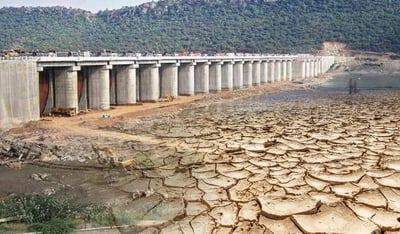
Telangana faces a massive water emergency that could stretch over several months. Chief Minister A. Revanth Reddy has officially made it clear that no canal water will reach farming fields in the coming season. The administration has taken a firm stand that every single drop of water left in the reservoirs must be saved only for people to drink. Families across villages, towns, and cities need basic drinking supplies, and the government cannot afford to empty the dams for farming when rainfall has fallen drastically short. This announcement comes as an alert for farming communities across the state who depend on reservoir gates opening each year to irrigate their land.
The reason behind this tough decision is a severe dry spell driven by the El Nino weather pattern. Chief Minister Revanth Reddy cautioned that this dry phase is not a minor hurdle that will disappear in a few weeks. Instead, government calculations show that the state might have to deal with intense heat, drying rivers, and water shortages for anywhere between eight to ten months. This prolonged dry window could stretch deep into the summer heat until monsoon clouds return. With heat rising and ground moisture vanishing fast, the administration is preparing for what could turn into one of the most demanding dry periods in recent memory.
Farmers across districts are now in a very delicate spot. In typical crop cycles, thousands of families prepare their land for paddy, which needs stagnant water and large amounts of daily irrigation. Revanth Reddy made an open appeal directly to farming families, asking them not to sow crops that drink up high quantities of water. Cultivating paddy under such low reservoir levels could push families into deep debt if the crops dry up halfway through the season. The state government wants farmers to turn toward dry crops, pulses, oilseeds, or alternative options that can survive on very little moisture. While changing crop choices on short notice is tough for any cultivator, officials argue that sowing paddy without guaranteed canal water is a recipe for complete financial ruin.
Water is not the only resource running out during this difficult period. A parallel power crunch is knocking at the door. Chief Minister Revanth Reddy pointed out that electricity demand is shooting through the roof because tube wells run day and night when rains fail. At the same time, buying electricity from other power markets across the country has turned difficult and costly because nearby regions are also facing high consumption. If dams do not have enough water, hydro power stations stop spinning, taking away a big source of cheap green electricity. The state leader warned that both water and power supplies are tightly connected, meaning the general public, business owners, and rural households must start saving electricity right away to avoid sudden blackouts.
To handle this growing problem before it spins out of control, the state machinery is shifting into emergency mode. A special senior officer is being placed in charge as a nodal coordinator to track rainfall deficits, dam levels, and weather changes day by day. This officer will connect different government wings including irrigation, drinking water supply, electricity boards, and revenue departments so that all teams work on the same page. Instead of waiting for village taps to run completely dry, the administration plans to track village tanks, check tubewell depths, and dispatch emergency water tankers to regions showing early signs of distress.
The state government has also reached out to the national leadership in New Delhi. Telangana leaders placed their worries directly before Union Agriculture Minister Shivraj Singh Chouhan to seek urgent monetary assistance, grain buffers, and resource backing. Handling a long drought demands massive funds, especially when village populations need tanker water deliveries, cattle need dry fodder, and farmers need financial support to offset seasonal crop losses. State authorities hope that timely help from central funds will cushion rural workers from losing their daily livelihoods during these dry months.
Political tempers have flared up rapidly following the government announcement. Leaders from the opposition Bharat Rashtra Samithi, led by former minister T. Harish Rao, launched strong attacks against the state cabinet. The opposition argues that nature alone cannot be blamed for dry fields. They allege that the state government failed to manage reservoir storage properly during earlier rain spells, allowing precious river water to drain away without being collected in key irrigation networks. Opposition figures are demanding that the government publish a clear white paper showing full numbers on current dam levels, actual daily drinking requirements, and emergency spending plans, rather than simply shutting off farm water supplies without a safety net for village families.
The ground reality for common citizens, however, goes far beyond party politics. In hundreds of villages, groundwater tables are already falling fast, forcing villagers to bore deeper into the earth with little success. Village cattle are also at risk because green grass and ponds disappear quickly when irrigation stops. Urban centers like Hyderabad are equally on watch, as high rise apartments, industrial parks, and daily domestic users draw heavily from distant reservoirs. If those very reservoirs are locked exclusively for household taps, city administrations will still need to enforce strict rules against wasting water on gardens, car washing, or construction work.
Local agricultural officers are now tasked with going directly to village squares to talk to cultivators. These field visits are meant to explain why switching away from traditional paddy is necessary this season. Officials plan to distribute seeds for alternative dryland crops, promote sprinkler systems, and guide farmers on ways to save soil moisture. Yet, building confidence among small landholders remains a huge test. A farmer who has spent his entire life growing wet paddy often lacks the tools, market links, or money to switch to millets or oilseeds overnight without direct subsidy backing.
Looking ahead, the upcoming season will test the resilience of both the administration and the rural population. With canal shutters remaining firmly shut to safeguard basic drinking water, the coming months will require shared patience and disciplined usage across the state. If the weather conditions stay harsh through the coming summer, every household will feel the pinch of this shortage. The state government faces the massive duty of keeping kitchen taps running, preventing cattle distress, keeping power lines alive, and ensuring that rural families receive enough assistance to survive until normal monsoon showers finally return.