
Police Detain Rahul Gandhi Priyanka Gandhi And Akhilesh Yadav Outside PM Residence As Thousands Regroup At Jantar Mantar
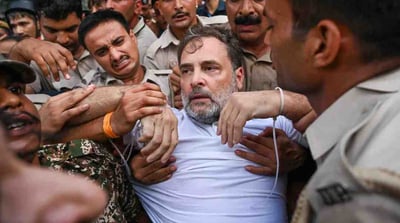
On July 21 2026, high drama unfolded on the streets of New Delhi as top opposition leaders marched directly toward 7 Lok Kalyan Marg, the official residence of Prime Minister Narendra Modi. Led by Congress leaders Rahul Gandhi, Priyanka Gandhi Vadra, Mallikarjun Kharge, and Samajwadi Party chief Akhilesh Yadav, the political figures staged an unexpected sit in on the road leading to the high security complex. The leaders gathered to demand answers for the intense police action taken against young student aspirants during the Cockroach Janta Party CJP march on July 20 2026. Raising slogans against the central government, the opposition figures demanded the immediate resignation of Union Education Minister Dharmendra Pradhan over recurring competitive examination paper leaks and police violence.
As the opposition sit in blocked traffic near the prime minister residence, security forces moved quickly to control the escalating situation. Personnel from the Delhi Police and paramilitary forces encircled the demonstration site and urged the leaders to disperse, pointing out that public gatherings are strictly prohibited around Lok Kalyan Marg. Union Minister of State in the Prime Minister Office Jitendra Singh personally visited the location to initiate talks with Rahul Gandhi, offering an immediate parliamentary discussion on examination irregularities. However, the opposition leaders maintained their stand, demanding a public apology from top leadership and the prompt removal of the education minister. Within 2 hours of the demonstration, police officers began removing and detaining key political workers and senior leaders, placing them in security vehicles to clear the road.
While high profile detentions occurred outside the prime minister residence, a massive crowd of students simultaneously returned to the main protest venue at Jantar Mantar. Following the heavy lathicharge and tear gas deployment on July 20 2026, administrative authorities had removed tents and temporary structures from the site overnight. Despite heavy security barricades and rain, 1000s of young aspirants and political supporters streamed back into the area by July 21 2026. Demonstrators rebuilt their gathering spots, chanting slogans against examination leaks and declaring that physical intimidation would not silence their push for educational reforms.
The rapid escalation across multiple locations in the capital highlights a widening gap between administrative responses and political grievances. The decision of opposition leaders to take their protest directly to the doorstep of the executive branch reflects a strategy to transform a student movement into a central political issue ahead of legislative debates. While government representatives maintain that official channels remain open for constructive discussion on national examination protocols, the reliance on police detentions and security cordons around public spaces creates friction. Restoring public calm will require transparent policy commitments and institutional accountability rather than temporary security measures.