
Putin Proposes Trilateral Summit With Trump And Xi To Negotiate Ukraine War Solution At Upcoming China Meeting
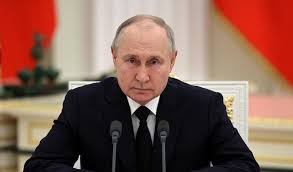
Russian President Vladimir Putin has put forward a bold diplomatic proposal to hold a direct three-party summit with United States President Donald Trump and Chinese President Xi Jinping to negotiate an end to the war in Ukraine. The extraordinary plan aims to gather the heads of the world's three most powerful military and economic nations around a single negotiating table. By seeking direct talks between Washington, Beijing, and Moscow, the Russian leader is attempting to reshape global diplomacy and broker a broad settlement to the Eastern European conflict at the highest possible international level. However, the proposal has sparked intense concern among European governments and Ukrainian officials, who fear that powerful foreign leaders could attempt to decide the future borders of an independent European nation behind closed doors.
The idea for the high-stakes gathering was formally confirmed by Kremlin spokesperson Dmitry Peskov following international media reports. Peskov stated that while all three nations acknowledge the theoretical possibility of holding such a meeting, no formal agreement has been locked in place regarding the precise meeting date or the official negotiating agenda. Diplomatic sources reveal that Putin first floated the concept during a personal telephone conversation with Donald Trump on the ninth day of the month of October. Russian officials followed up through diplomatic channels with Beijing, where Chinese authorities indicated they would not object to hosting the discussion if the American president agreed to participate.
According to people familiar with the diplomatic planning, Moscow suggested organizing the three-way meeting on the sidelines of the Asia-Pacific Economic Cooperation forum scheduled to take place in the southern Chinese technology city of Shenzhen on the eighteenth and nineteenth days of the month of November. Staging the summit in China would allow all three world leaders to meet on neutral diplomatic ground during an already scheduled international gathering. While senior White House officials have clarified that Trump has not yet given a final green light, they noted that he remains receptive to novel diplomatic formats that could help deliver on his public promise to bring the war to a rapid conclusion.
From a critical geopolitical perspective, Putin's push for a three-way summit reveals a calculated strategy to sidestep European allies and deal strictly with major powers. Intelligence observers note that the Russian leadership envisions this format as a modern version of the historic 1945 Yalta Conference, where global superpowers met to carve out post-war spheres of influence across the European continent. By structuring peace talks around Washington and Beijing, Moscow seeks to cement its status as an indispensable global superpower while diminishing the influence of Britain, France, Germany, and the European Union, which have spent years providing billions in defensive aid to Kyiv.
The most controversial element of the proposed summit is the glaring absence of Ukraine from the negotiating table. The prospect of foreign leaders sitting in a distant Asian conference room to negotiate the partition or neutrality of Ukraine without Ukrainian representatives present violates the core international diplomatic principle that nothing about Ukraine should be decided without Ukraine. Ukrainian President Volodymyr Zelenskyy has repeatedly warned that any deal made over the heads of the Ukrainian people would be illegitimate and unworkable on the ground. European defense officials similarly caution that cutting Kyiv out of peace discussions risks creating an artificial ceasefire that rewards military aggression and destabilizes long-term European security.
For Donald Trump, the proposal represents both a major political temptation and a serious foreign policy trap. The American president is eager to demonstrate his deal-making prowess and secure a fast end to the fighting ahead of crucial domestic legislative elections. Trump has recently defended controversial decisions to waive specific energy sanctions on Russian fuel in an effort to bring Moscow to the bargaining table and ease global fuel inflation. However, agreeing to a summit that excludes Ukraine and sidelines European partners would risk alienating long-standing North Atlantic Treaty Organization allies and trigger fierce bipartisan backlash inside the United States Congress.
For Chinese President Xi Jinping, hosting the three-way gathering presents a delicate diplomatic balancing act. Welcoming both the American and Russian presidents to Shenzhen would elevate China's standing as a preeminent global mediator capable of solving crises that Western diplomacy failed to resolve. At the same time, Chinese trade officials are cautious about letting sensitive geopolitical negotiations overshadow their primary economic agenda for the regional economic forum. China relies heavily on open trade with European consumer markets, and European leaders have grown increasingly vocal about Beijing's ongoing trade support for Moscow. Standing alongside Putin in negotiations that partition Ukraine could trigger retaliatory trade penalties from European partners, complicating China's own economic recovery plans.
Military developments on the front lines further complicate the feasibility of peaceful negotiations. Both Russian and Ukrainian armies continue to engage in intense, wide-scale combat, trading deep infrastructure strikes and heavy artillery barrages. Ukrainian drone units recently set major Russian fuel terminals on fire in St Petersburg, while Russian missile forces knocked out electrical grids across several Ukrainian provinces. With both sides actively attempting to inflict maximum economic pain to improve their bargaining positions, sitting down for friendly diplomatic talks in Shenzhen appears disconnected from the fierce realities on the battlefield.
International legal scholars point out that treating the Ukraine war as a simple three-way superpower dispute ignores the international legal architecture built after the second world war. The United Nations Charter explicitly protects the territorial integrity and national sovereignty of every member state, regardless of whether a country is large or small. Allowing three nuclear-armed states to negotiate borders and security guarantees for a sovereign neighbor would undermine the United Nations framework and establish a dangerous precedent where regional powers feel free to conquer neighbors and settle terms through great-power bargains.
The proposal for a trilateral summit between Putin, Trump, and Xi illustrates the growing friction between traditional international law and raw power politics. While the desire to end the loss of human life in Eastern Europe is shared across the world, genuine and lasting peace cannot be built by excluding the nation that has suffered the physical destruction of the conflict. Unless Ukrainian leaders and their European partners are given full seats and direct voices at the negotiating table, any agreement negotiated exclusively by Washington, Moscow, and Beijing will remain a temporary arrangement rather than a foundation for enduring international peace.