
Rahul Gandhi Tells Amit Shah to Convince Narendra Modi for Open Debate Instead of Confusing Him
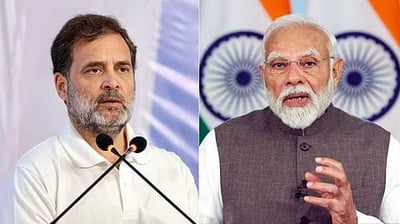
The political confrontation between the ruling party and the opposition has reached a boiling point after Congress leader Rahul Gandhi challenged Prime Minister Narendra Modi to an open public debate. In a direct message addressed to Union Home Minister Amit Shah, the Leader of the Opposition in the Lok Sabha urged him to stop confusing the Prime Minister and instead convince him to step forward and debate major national issues openly. The exchange has triggered intense verbal sparring across political corridors, drawing sharp responses from senior leaders on both sides.
The debate challenge arose during ongoing political arguments over electoral processes, democratic institutions, and foreign influence claims. Both major political camps have been trading heavy accusations, with leaders using aggressive campaign speeches and internet platforms to criticize each other. The Congress party has accused the government of avoiding direct scrutiny, while the ruling Bharatiya Janata Party maintains that parliamentary procedures already offer the proper venue for discussions.
Addressing Amit Shah through digital channels, Rahul Gandhi shared video clips highlighting what he termed contradictory statements on holding debates. He asserted that instead of offering conflicting messages, the Home Minister should simply persuade the Prime Minister to face him in a public discussion. The Congress leader added that he was ready to participate on any platform and at any time chosen by the ruling party.
The Congress leader went a step further, asserting that he could prove serious allegations against the head of government in just five minutes if a direct face-to-face debate took place. He stated that the government could select any venue, channel, or moderator of its choice. These remarks followed sharp exchanges where opposition parties rejected claims that they were acting against national interests, demanding that the Prime Minister defend his government policies openly before the public.
The ruling party quickly pushed back against the dare, dismissing it as political theater and grandstanding. Union ministers and senior party spokespersons criticized the language used by the opposition leader, stating that an open street-style challenge ignores the dignity of constitutional offices. They pointed out that as the Leader of the Opposition, Rahul Gandhi holds a constitutional position and should demonstrate proper seriousness and maturity in national discourse.
Senior government leaders, including Finance Minister Nirmala Sitharaman, reminded the opposition that India's Parliament is the supreme democratic forum designed precisely for debating policies, legislation, and national security. She emphasized that lawmakers do not need to hunt for private stages, television studios, or public squares to hold debates when the floors of the Lok Sabha and Rajya Sabha exist for that exact purpose. Ministers urged the opposition to attend legislative sessions constructively and present arguments inside the house rather than issuing challenges online.
Home Minister Amit Shah had previously addressed the debate demands at public gatherings, stating that the government has never shied away from discussing vital matters inside Parliament. He noted that treasury benches are prepared to answer every question provided the discussion is conducted with proper facts, substance, and adherence to parliamentary decorum. Ruling party leaders accused the opposition of creating noise outside while disrupting formal proceedings whenever Parliament convenes.
The war of words reflects the growing heat in Indian national politics as key state elections approach. Opposition leaders, including Congress President Mallikarjun Kharge, have backed the call for transparency, arguing that the public deserves direct answers from the highest leadership on critical economic and institutional concerns. On the other hand, the treasury benches maintain that the opposition is resorting to aggressive rhetoric simply to compensate for electoral setbacks.
Political observers point out that televised, one-on-one leadership debates are common in presidential systems such as the United States, but India's parliamentary democracy has traditionally centered on legislative floor discussions. While public challenges create headlines and mobilize party cadres, direct face-to-face debates between a sitting Prime Minister and an opposition leader outside Parliament have rarely taken place in the nation's political history.
The sharp rhetoric shows no signs of slowing down as party workers and spokespersons amplify the statements across social media. Both camps continue to use the exchange to rally support among voters, ensuring that the question of leadership, debate formats, and institutional accountability remains at the center of the ongoing political fight.