
Ram Mandir Donations Theft Row Supreme Court Suggests Setting Up A SIT
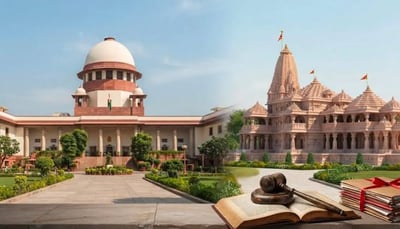
On July 20 2026, the courtroom of the Supreme Court of India became the center of public attention as a bench led by Chief Justice of India Surya Kant along with Justice Joymalya Bagchi and Justice V Mohana took up the sensitive matter of the Ayodhya Ram Mandir donation theft. Taking a clear stance on the alleged embezzlement of sacred funds at the Shri Ram Janmabhoomi Teerth Kshetra Trust, the top court suggested setting up a Special Investigation Team led by a senior police officer to directly conduct the ongoing probe. The court firmly cautioned political parties against turning this simple criminal case into a political battlefield, stressing that the primary objective of the judiciary is to ensure a fair, impartial, and credible investigation that reaches its logical outcome.
The trouble began in the first week of June 2026 when serious allegations surfaced regarding the missing money offered by millions of faithful devotees. Investigative teams reviewing security camera footage discovered roughly 70 suspicious occurrences at the temple Pilgrim Facilitation Centre between April 27 2026 and June 5 2026. Staff members were allegedly captured on video stashing bundles of cash into their personal clothing, pockets, and shoes during routine cash counting sessions. In response to these alarming findings, the state police conducted targeted raids and arrested 8 individuals, including key suspect Ram Shankar Yadav, and managed to recover nearly 80 lakh rupees in diverted funds along with gold jewelry, vehicle documents, and cash hidden in facility washrooms. The fallout from these revelations was swift, leading to high profile resignations from senior trust officials like former general secretary Champat Rai and trustee Anil Mishra.
During the intense court proceedings, Solicitor General Tushar Mehta presented a confidential status report in a sealed cover on behalf of the Uttar Pradesh government. While the state government had previously formed a 3 member panel on June 13 2026 consisting of Lucknow Divisional Commissioner Vijay Vishwas Pant, Special Secretary Neel Ratan, and Inspector General of Police Kiran S, the actual criminal investigation was still being handled by local police officers. Observing that local station level officers might lack the specialized reach required for such a high profile matter, Chief Justice Surya Kant proposed that the state government formally reconstitute a specialized team under the leadership of a top rank IPS officer, specifically mentioning Inspector General Kiran S, to directly manage and execute the probe rather than just playing a supervisory role.
Addressing requests from petitioners seeking a central agency probe and public disclosure of all donation records, the Supreme Court maintained a grounded approach. Senior advocate Devadatt Kamat urged the bench to order the publication of full financial inventories, including gold and silver items contributed by devotees since the inception of the temple trust. Chief Justice Surya Kant responded that while strict digital accounting and proper receipt maintenance are mandatory for transparency, opening public channels for unverified claims could create chaos, as individuals might falsely claim missing precious stones without proof. The bench emphasized that maintaining a rigorous inventory internally for official review will protect the institution from wild claims while ensuring total accountability for every contribution.
Looking closely at the broader picture, the situation highlights significant administrative and operational gaps within large public religious trusts. The ease with which funds were reportedly siphoned off points to weak physical security checks, poor regulation of movement in counting areas, and a lack of real time digital tracking for cash flow. Relying purely on traditional manual counting creates vulnerabilities that greedy individuals can exploit. Establishing a dedicated high level investigative team is a crucial immediate step to restore public faith, but lasting protection will require full modernization of donation handling, routine external audits, and strict access controls across all sacred spaces. The Supreme Court has scheduled the next crucial hearing for July 27 2026, when the state government will submit its final response regarding the proposed special team.