
RBI Rate Hike Cycle Set To Begin As Rising Inflation And Global Hawkish Central Banks Force Policy Shif
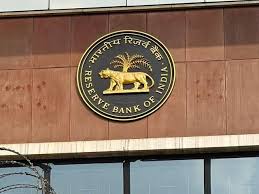
A major change is coming to the Indian financial system that will soon touch the monthly budget of every family and business across the country. For many months, ordinary households have watched their grocery bills, transportation expenses, and daily living costs climb higher week after week. While store owners and factory managers have tried to absorb rising expenses, price increases have now spread into almost every corner of the marketplace. To stop prices from running out of control, financial experts and market watchers believe the Reserve Bank of India is finally preparing to step in and raise official interest rates, marking the start of a new borrowing cycle.
When a central bank decides to lift interest rates, it uses a powerful tool that directly influences how money moves through society. An increase in the basic benchmark rate, known as the repo rate, means that commercial banks must pay more to borrow funds from the central bank. In turn, commercial banks quickly pass these higher borrowing costs along to ordinary citizens and local companies. Anyone planning to take out a loan to buy a new home, purchase a family car, or expand a neighborhood shop will soon face higher monthly repayment charges. At the same time, banks usually increase the interest they pay on fixed deposits and regular savings accounts, encouraging people to save money rather than spend it immediately, which helps cool down rising prices.
Expectations for an immediate change in policy have jumped significantly over recent days. A comprehensive survey of sixty-one professional economists conducted by the Reuters news agency revealed that nearly sixty percent expect the monetary policy committee to approve an increase of twenty-five basis points at its upcoming policy meeting. A single basis point is equal to one-hundredth of a percentage point, meaning a twenty-five point change represents a quarter of a percentage point increase in borrowing rates. This widespread agreement among market forecasters shows that the financial community believes the central bank can no longer delay action without risking serious damage to long-term price stability.
The main reason behind this urgent shift is that price pressure in India is no longer limited to a few seasonal food items like tomatoes or onions. In earlier months, officials could argue that high food prices were temporary issues caused by unseasonal rains or local transport problems that would resolve themselves after a good harvest. However, recent economic data shows that price increases have broadened across manufactured goods, healthcare, clothing, house rents, and daily services. When price rises spread across so many different goods at the same time, economists call it broad-based inflation. If the central bank does not respond with firmer policy, higher prices risk becoming permanent, eating away at the purchasing power of working families.
External events across world markets are adding even more pressure on domestic policymakers. Major central banks in developed countries, including the Federal Reserve in the United States and monetary authorities in Europe, have adopted a very tough approach to fighting inflation, a position that financial traders describe as hawkish. By keeping foreign interest rates elevated, these global central banks have created fierce worldwide competition for investment capital. When interest rates in wealthy nations remain high, global investors often choose to pull their money out of developing nations and invest in foreign government bonds, which can weaken local currencies like the Indian rupee.
A weaker currency creates immediate difficulties for an importing nation because it makes essential foreign goods far more expensive to buy. India depends heavily on international suppliers for crude oil, cooking oils, electronics, and industrial raw materials. If the rupee loses value against the American dollar, the cost of bringing oil into Indian ports goes up, which quickly leads to higher prices at petrol pumps and higher electricity costs for local factories. By raising domestic interest rates, the Reserve Bank makes Indian government bonds more attractive to international investors, encouraging foreign money to stay inside the country and providing strong support for the value of the rupee.
While economists agree that interest rates are going up, there is an ongoing debate about how far the increases will go. Financial analysts at major global institutions like Nomura and Barclays believe the country will see a relatively mild and shallow cycle, predicting total rate increases between twenty-five and fifty basis points. On the other hand, research teams at Bank of America, Goldman Sachs, and ANZ expect a much larger and more aggressive tightening cycle, forecasting that borrowing costs could rise between seventy-five and one hundred basis points over the coming months.
Financial trading desks are already betting that borrowing costs will remain high for an extended period. In the money markets, where major banks trade financial contracts called interest rate swaps to protect themselves against future swings, traders are pricing in roughly one hundred basis points of rate hikes over the next twelve months. Looking even further ahead, those same financial contracts suggest that borrowing costs could climb by approximately one hundred and forty basis points over the next twenty-four months. These market bets show that large institutional investors do not expect a quick, one-time fix, but rather a long campaign to keep money supplies in check.
This shift in strategy presents a delicate balancing act for economic planners who want to protect strong national growth. In October 2026, the Indian economy continues to expand at a healthy pace, outperforming many other major economies around the world. Factories are operating near full capacity, and infrastructure spending by the government is creating construction jobs across small and large cities. The danger of raising interest rates too fast is that expensive loans could make companies hesitate to build new factories, while discouraging young families from buying homes or consumer goods, which could unintentionally drag down overall economic expansion.
Because of this tricky balance, market observers are watching the official wording used by central bank leaders just as closely as the interest rate number itself. In recent meetings, the monetary policy committee has maintained what it calls a neutral policy stance, meaning it was equally open to cutting rates, raising rates, or leaving them unchanged depending on new data. Analysts at Goldman Sachs and Bank of America suggest that policymakers may soon drop the neutral stance and officially announce a move toward calibrated tightening or the withdrawal of accommodation. Changing the official stance sends a powerful signal to commercial banks and corporate borrowers that the era of cheap, easily available credit is coming to an end.
The coming policy decisions will shape the financial landscape for Indian citizens well into the next year. If the central bank chooses to act with an initial increase now, it can pause to observe how markets react before deciding whether further hikes are needed in December. By moving in a measured, predictable way, the monetary authorities hope to tame rising everyday prices, protect the national currency from global shocks, and keep India on a path of steady, sustainable economic growth that benefits the entire nation.