
RBI sees Indian rupee as undervalued as foreign capital inflows touch 32 billion dollars
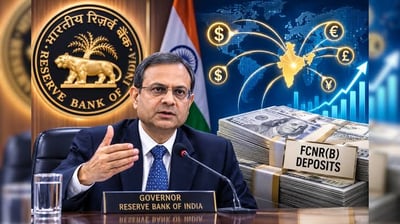
In a major statement on India's external economic standing on 26 July 2026, Reserve Bank of India Governor Sanjay Malhotra dismissed concerns surrounding recent exchange rate pressure, stating that the Indian rupee is currently undervalued in both nominal and real effective exchange rate terms. Addressing ongoing market volatility, Malhotra emphasized that recent currency movements do not reflect any underlying weakness in India's fundamental economic health. Instead, the pressure on the local currency has been driven almost entirely by elevated global uncertainties, strong American dollar trends, and broader market fluctuations across emerging economies. The central bank reaffirmed that it does not target a specific exchange rate band, intervening in foreign exchange markets solely to curb erratic price swings and maintain smooth market operations.
The Governor's statements came as official figures revealed that recent capital attraction measures initiated by the central bank have generated a massive foreign capital response. Indian financial institutions have mobilized nearly 32 billion dollars in fresh foreign capital, with the vast majority coming through Foreign Currency Non Resident Bank, or FCNR B, deposit accounts. In addition to deposit mobilizations, foreign portfolio investors poured more than 7 billion dollars into Indian government securities, further fortifying the nation's balance of payments. Addressing market debate over whether these funds were simply recycled existing domestic deposits, the central bank clarified that these represent genuine fresh capital arrivals that significantly enhance national foreign exchange liquidity.
To facilitate these large scale inflows, the central bank implemented special policy provisions, including bearing the hedging costs for long term foreign currency deposits and offering concessional currency swaps. Responding to questions regarding potential risks associated with absorbing hedging expenses, Malhotra assured markets that the central bank operates a secure risk management framework. Excess foreign currency received through swap facilities is systematically reinvested in safe international assets, effectively neutralizing fiscal risk for the central bank. These proactive capital measures have provided a substantial buffer for India's foreign exchange reserves, enabling the domestic economy to navigate persistent external trade challenges and unpredictable international financial flows.
The broader macroeconomic environment continues to display robust fundamental metrics, backing the central bank's optimistic assessment. India recorded strong performance across key external indicators, including current account stability, resilient service sector exports, steady worker remittance inflows, and improving foreign direct investment levels. Furthermore, domestic financial institutions remain well capitalized with strong liquidity coverage ratios, allowing credit growth to expand safely without overheating the broader banking sector. With inflation control remaining the primary operational priority for policymakers, the combination of substantial foreign deposit inflows and strong economic fundamentals provides the central bank with significant flexibility to maintain currency stability through 2026.