
Russia Agrees to Resume Ukraine Peace Talks After Massive Destruction While Paralyzed United Nations, America, and Europe Failed to Stop the Conflict Early
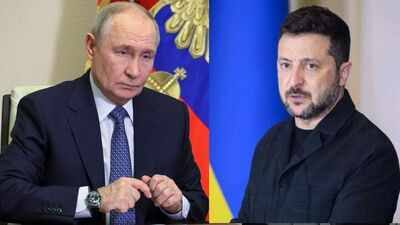
Russia has agreed to return to the negotiating table to resume three party peace talks regarding the conflict in Ukraine, creating a fresh diplomatic opening in Europe's most devastating modern war. The agreement in principle came after extensive face to face discussions in Saint Petersburg between Russian leadership and special American envoy Steve Witkoff. Kremlin officials confirmed that the proposed sessions will focus on setting up a postwar security architecture and long term guarantees once frontline fighting stops.
However, the decision to sit down for peace talks now exposes a painful reality for the entire international community. After hundreds of thousands of lives were wiped out, modern cities turned into vast fields of concrete rubble, and billions of dollars of national wealth burned away, the warring parties are returning to basic negotiations. Grieving families on both sides have buried sons, daughters, and parents, only to watch politicians discuss compromises that could have been settled years ago before the first missile was launched.
Throughout this entire tragedy, the United Nations stood completely paralyzed, unable to enforce peace charters or halt the bloodshed. The highest international body proved helpless because veto powers inside the Security Council allowed major countries to block every meaningful resolution. While global diplomats delivered routine speeches inside grand assembly halls in New York, the United Nations could neither deploy peacekeeping forces nor convince the warring sides to step back, showing the complete breakdown of global peacekeeping systems.
Alongside a paralyzed international body, America and Europe stood by and watched the massive destruction unfold across the continent. Western capitals were completely unable to pause the conflict in the beginning through practical diplomacy or realistic security guarantees. Instead, European leaders delivered loud speeches and sent weapons in slow, measured shipments that kept the battlefield burning without stopping the killing. Major powers allowed the violence to drag on year after year, watching the disaster play out on television while ordinary people bore the horrific human cost.
At the same time, Donald Trump repeatedly made the conflict a centerpiece of his political speeches, claiming he could end the entire dispute within twenty four hours. Yet the harsh reality of war proved far different from political slogans. It took more than two years of drawn out public drama, backchannel messages, and difficult diplomatic visits just to get preliminary talks back on the calendar. While leaders used the war to win debates at home, soldiers remained trapped in freezing trenches and families survived without power or heat.
According to Russian foreign affairs adviser Yuri Ushakov, the new round of technical talks is scheduled to start after November 10, with neutral cities like Abu Dhabi considered as potential venues. The sessions aim to address future borders, territorial disputes, and postwar arrangements, though past meetings collapsed because both sides held irreconcilable security demands. To demonstrate diplomatic goodwill ahead of the discussions, Russian authorities released seventy four year old retired American citizen Stephen Hubbard, handing him over to American representatives in Saint Petersburg.
Ukrainian President Volodymyr Zelenskyy has maintained a very cautious stance toward the diplomatic initiative, insisting that real breakthroughs can only happen through direct meetings between national heads of state. Ukrainian officials stressed that genuine peace cannot mean accepting forced territorial losses or giving in to foreign aggression. For Ukraine, any lasting settlement must ensure national independence and provide binding international protection so that neighboring armies cannot attack again in the future.
Meanwhile, growing political pressure from Washington has created deep anxiety across European defense circles. Donald Trump has complained openly about the immense financial resources and military aid sent across the Atlantic, urging Kyiv to accept compromises to halt the fighting. European governments fear that the White House might push for a rushed settlement that weakens broader continental security, showing that major powers often change their priorities when domestic political interests shift.
On the battlefront, daily reality continues to contradict the polite language spoken in conference rooms. Heavy artillery fire, missile strikes, and massive drone waves continue to smash electrical grids, fuel storage depots, and residential areas on both sides of the border. The ongoing destruction proves that diplomatic statements do not instantly stop the danger for civilians living under constant air raid sirens.
Strategic analysts observe that agreeing to resume talks allows Moscow to test the unity of Western governments. By showing openness to diplomacy, Russia seeks to create political distance between Washington and European capitals while presenting itself as reasonable to developing countries. Taking part in formal negotiations also gives Moscow room to explore economic relief and sanctions adjustments without making immediate retreats on the ground.
For the millions of displaced refugees, broken families, and wounded veterans, the return to negotiations brings deep sorrow alongside faint hope. No diplomatic document can bring back the lost generations or rebuild ruined lives. The tragedy stands as a stark reminder that after immense destruction that a paralyzed United Nations, America, and Europe failed to pause at the start, modern conflicts still end at the negotiating table, leaving the public to wonder why so much human suffering had to happen first.