
Russian air strike kills 26 people at Ukraine humanitarian aid centre in Zaporizhzhia
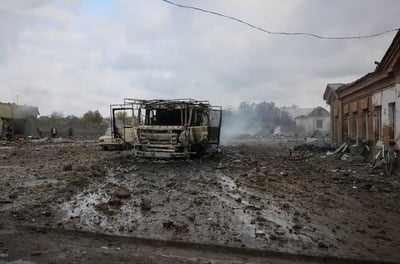
A quiet morning routine turned into a scene of complete devastation in a small southern Ukrainian village when powerful bombs smashed into a local community hub. Ordinary men, women, and elderly pensioners were standing in line waiting to collect basic food parcels, boxes of clean drinking water, and daily medicines. Within seconds, a massive explosion tore through the walls, filling the street with fire, falling bricks, and blinding dust. When the smoke cleared, twenty six people were dead on the ground, leaving an entire rural neighborhood in shock and tears.
The target of the destructive strike was a former village school in the settlement of Komyshuvakha, located in the southeastern Zaporizhzhia region. Because ordinary classrooms had been shut down due to fighting nearby, the school compound was transformed into a vital lifeline for thousands of remaining residents. Volunteers, local officials, and charity workers used the open hallways and basement rooms to store flour, oil, warm blankets, and hygiene kits. For families who have lost electricity, running water, and regular work, visiting this supply point was the only way to feed their children and survive the cold season.
Eyewitnesses and rescue staff reported that the attack was carried out through two separate waves designed to cause maximum harm. The initial aerial bombs slammed directly into the school grounds right as people gathered outside to register for food packages. As terrified survivors ran for their lives toward the reinforced basement shelter, a second round of heavy bombs crashed through the concrete roof. The force of the blast collapsed the upper floors directly onto the shelter below, burying dozen of people under mountains of broken stone and twisted steel bars.
The people who lost their lives were not soldiers or armed fighters, but vulnerable local citizens and public servants helping them. Among the dead were four police officers who were organizing the waiting line and keeping order, along with two trained rescue team members who rushed in immediately to pull bleeding survivors from the flames. Several other relief workers and villagers suffered terrible cuts, broken bones, and head injuries, and they were quickly carried into local ambulances and rushed to nearby hospitals for urgent surgery.
Emergency rescue crews spent hours crawling into dark, narrow spaces under the rubble to search for anyone still breathing. Firefighters worked with hand tools and their bare fingers to move heavy concrete slabs while thick smoke burned their eyes. The rescue mission was made even more dangerous because enemy surveillance drones continued to circle in the sky above the village. Every time a buzzing noise was heard overhead, workers had to pause their digging and take cover, fearing another sudden blast on the exact same location.
National leaders in Kyiv expressed deep anger and sorrow over the attack, calling it a deliberate act of cruelty against defenseless people. President Volodymyr Zelenskyy spoke to the public late on the evening of Monday, November 2, 2026, confirming the rising death toll and condemning the destruction of the civilian relief point. The president stated that dropping powerful bombs on people waiting for bread proves that Moscow has no desire to reduce fighting or respect basic human safety rules, especially right after both sides had managed limited humanitarian evacuations in nearby flooded districts.
Frontline towns across southern Ukraine have become increasingly dangerous for ordinary civilians who refuse to leave their family homes. Many older residents have spent their whole lives in these farming villages and feel they have nowhere else to go. However, constant shelling and power blackouts have turned basic life into a daily struggle. Humanitarian stations like the one destroyed in Komyshuvakha are usually marked on maps and known to local populations as safe spaces, making this direct hit a terrifying message for aid workers operating across the eastern and southern fronts.
Military experts pointed out that the destruction was caused by heavy guided aerial bombs. These massive weapons carry thousands of kilograms of high explosives and are dropped by warplanes from safe distances far behind the frontline. Because the bombs glide fast through the air and pack enormous explosive power, standard air defense systems struggle to stop them before they hit ground targets. When such heavy weapons hit fragile village buildings like schools and community halls, the buildings stand zero chance against the blast.
International aid agencies and global human rights monitors voiced strong condemnation following the fatal bombing. International law strictly forbids targeting civilian infrastructure, hospitals, and designated aid supply depots. Representatives from international relief organizations stressed that if humanitarian teams cannot distribute food and medicine without fear of being killed, millions of people living near the fighting lines will face extreme hunger and sickness as winter freezes the country.
Back in the quiet village, surviving neighbors gathered to lay flowers near the ruined gate of the school. Volunteers swept away broken glass and gathered scattered boxes of food that were covered in brick dust and blood. The tragedy has left a deep scar on the community, serving as another painful reminder of the terrible daily price paid by ordinary people caught in the center of modern warfare.