
Security Forces Turn Kolkata Airport Into Fortress To Stop Mosque Access Protest
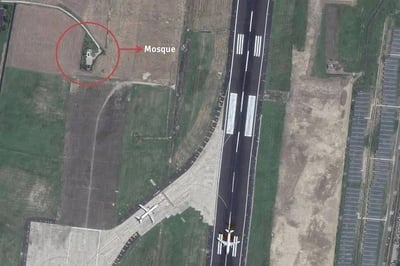
A massive security lockdown successfully neutralized a planned demonstration near the Netaji Subhas Chandra Bose International Airport in Kolkata on Friday 17 July 2026. The tension arose after the Bureau of Civil Aviation Security and the Airports Authority of India suspended congregational prayers at the 136 year old Bankra Mosque, also known as the Gouripur Jama Masjid, which is located inside the high security airside zone of the airport. In response to the restriction, the West Bengal Jamiat Ulema e Hind president, Siddiqullah Chowdhury, had issued a call for local residents to gather peacefully outside Gate Number 7 on Jessore Road wearing black badges to register their dissent. Fearing a significant breakdown in law and order right next to a critical transit hub, the state administration took absolutely no chances and immediately initiated a preemptive strategy to containerize the situation before it could escalate.
The physical measures implemented by the law enforcement agencies effectively transformed the busy thoroughfare into an impenetrable security zone early in the morning. The Bidhannagar Police Commissionerate deployed around 250 personnel alongside 2 companies of the Central Reserve Police Force to secure every major entry point leading toward the airport compound. Heavy steel barricades were erected across the lanes, while advanced anti riot gear, water cannons, a fire engine, and tear gas units were placed on absolute standby to deter any large assembly of people. Furthermore, the police department cited strict prohibitory orders under Section 163 of the Bharatiya Nagarik Suraksha Sanhita, which legally bars the gathering of more than 4 individuals in the designated perimeter. Route marches were conducted through the local neighborhoods, and outside vehicles were thoroughly checked, leaving the protest organizers with no physical space to gather their supporters.
When Siddiqullah Chowdhury arrived at the Bankra crossing around noon with a small group of associates, he found himself completely cut off from the intended venue. Senior police officials refused to let the leaders alight from their vehicles or proceed with the scheduled program, leaving the organizers with little choice but to formally call off the street agitation to avoid a violent confrontation. The mosque committee leaders expressed strong frustration, claiming that the administration had initially misled them by attributing the sudden closure to low visibility and temporary road repair works before turning it into an indefinite ban. From a security standpoint, the administration handled the immediate threat with immense tactical efficiency, ensuring zero disruption to flight operations or passenger movement. However, the heavy handed restriction on access also highlights a deeper communication gap between government authorities and local stakeholders, as the sudden suspension of a century old religious practice without a formal written circular is bound to cultivate lingering resentment within the community.
The entire episode has rapidly escalated into a highly charged political debate regarding national security versus historical religious rights. Chief Minister Suvendu Adhikari firmly defended the strict restrictions, publicly stating that the geographical proximity of the international airport to international borders means that national security and passenger safety must take absolute priority over any external access requirements. On the other hand, the mosque management committee maintains that the shrine has existed on that specific land since 1890, decades before the modern airport expansion took place, and that worshippers have consistently complied with metal detector scans and Aadhaar verification checks for years without a single security breach. With the street protests successfully contained by the massive police presence, the mosque committee has announced its intention to seek a permanent legal remedy through the judiciary. This shift ensures that the long term resolution regarding the potential relocation of the historic structure will be determined in a courtroom rather than through volatile confrontations on the streets of Kolkata.