
Supreme Court Rules Voter List Removal Does Not Cancel Indian Citizenship Rights
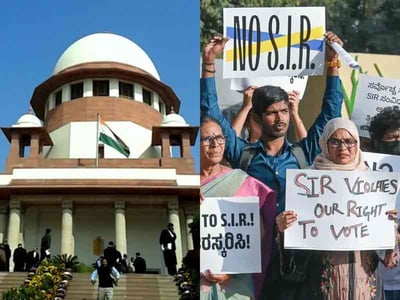
A major legal benchmark was established in the national capital on July 17 2026 as the highest judicial body protected the basic rights of millions of residents. A 3 judge bench headed by Chief Justice of India Surya Kant alongside Justices Joymalya Bagchi and V Mohana issued a critical clarification regarding the ongoing Special Intensive Revision of voter lists. The top court explicitly stated that the deletion of a person name from the electoral roll does not automatically result in the loss of their Indian citizenship. The judges emphasized that the poll body holds control over voter registration but lacks the constitutional mandate to strip anyone of their national identity. This observation came during a hearing on a urgent petition challenging the suspension of essential government subsidies for individuals whose names were removed during recent verification drives.
The legal challenge was brought forward by public representative Prasenjit Bose highlighting severe civil difficulties in West Bengal where local administration systems had begun linking welfare eligibility directly to the updated voter rolls. Senior advocate Gopal Sankaranarayanan informed the court that the state government had issued 3 separate official orders blocking access to the Public Distribution System and the Annapurna cash transfer scheme for excluded individuals. The petition stated that over 34 lakh appeals remain frozen before 19 appellate tribunals which are operating at an extremely slow pace. Alarmingly out of the 38000 appeals resolved so far nearly 70 percent resulted in voters being successfully restored to the lists. This high error rate indicates that systemic operational flaws in the verification process have wrongly targeted legitimate residents.
The judicial intervention highlights a profound procedural imbalance between state administrative efficiency and the protection of human welfare. The bench reiterated its earlier legal position from the Bihar verification case stating that the poll body has a corresponding duty to refer cases of doubtful status directly to the Central Government for formal adjudication under the Citizenship Act. By prematurely cutting off food security and financial aid before any formal administrative trial takes place local authorities have placed an unfair burden on the most vulnerable sections of society. The court noted that internal administrative guidelines should not disrupt basic human survival benefits while legal appeals are actively pending. A more balanced administrative approach would require the state to maintain basic civil rights and welfare access until a competent statutory authority delivers a final definitive ruling on an individual status.
This ruling marks a critical defensive victory for millions of marginalized families facing sudden economic exclusion. It establishes a necessary barrier between administrative voter updates and the broader constitutional protections of individual status. The Supreme Court has requested formal responses from the Election Commission of India and the state administration to address the lack of transparent guidelines and ground level legal assistance for illiterate applicants. With regional municipal elections scheduled to commence by October 2026 the demand for accelerated tribunal hearings has become an urgent necessity. The legal proceedings show that while state institutions possess the right to clean up public databases they cannot use database errors as a tool to bypass due process and deny fundamental livelihood support to the public.