
Slogan Versus Slogan At Parliament Entrance As NDA And Opposition Hold Face To Face Protests
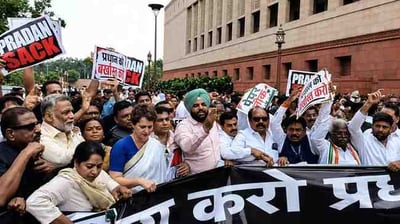
The entrance of Parliament at Makar Dwar turned into an intense political battleground on July 23 2026 when rival political alliances locked horns in a fiery demonstration. Lawmakers from the ruling National Democratic Alliance and the united Opposition gathered directly across from each other on the iconic steps creating a dramatic high tension scene right before the daily legislative business commenced. Armed with printed placards banners and megaphones both political sides attempted to drown out each other with competing chants and counter slogans. The physical standoff attracted dozens of media cameras and security personnel who monitored the situation closely to ensure that verbal arguments between lawmakers did not escalate into physical altercations on the precinct premises.
Opposition lawmakers wearing black armbands led the opening charge by raising loud chants against the government over recurring national examination paper leaks like NEET UG. They displayed placards accusing administrative bodies of ruining the academic futures of over 2000000 young citizens while simultaneously condemning police actions against student demonstrators. Demanding the immediate resignation of Union Education Minister Dharmendra Pradhan opposition leaders declared that democratic accountability must precede any routine parliamentary debate. They argued that the voice of young students protesting on the streets at Jantar Mantar deserved a full hearing on the floor of the House without bureaucratic evasions.
Moments after the Opposition established its demonstration NDA lawmakers moved into the same entrance area to launch a aggressive counter protest. Holding signs that criticized the Opposition for stalling parliamentary proceedings the governing alliance accused rival parties of running away from constructive legislative discussions. NDA leaders raised slogans emphasizing that the central government had already expressed total readiness to discuss examination reforms but the Opposition was intentionally blocking functioning for political mileage. Treasury bench representatives highlighted that continuous House adjournments waste public tax money and delay vital national legislation meant for the development of everyday working families.
The simultaneous face off at Makar Dwar highlights the growing trust deficit that currently dominates national governance. While visual displays of protest have long been a feature of democratic parliamentary culture direct slogan battles at entrance gates reflect how political positions have hardened on key public issues. For everyday citizens watching the evening television broadcasts the sight of elected representatives engaging in competitive shouting matches offers little immediate relief to practical problems. Students waiting for clean examination calendars and transparent testing frameworks find themselves caught between competing political narratives.
As security personnel eventually guided members inside for the formal sessions the political tension inside both Lok Sabha and Rajya Sabha remained uncomfortably high. Presiding officers repeatedly appealed for order and urged lawmakers to replace shouting matches with structured constitutional debates. However with both sides holding firm to their political strategies breaking the parliamentary deadlock will require genuine compromise and mutual dialogue. Restoring constructive debate inside the legislature remains essential to answering the pressing concerns of the youth and fulfilling the trust placed in elected leaders by the citizens of India.