
Supreme Court judge Justice Ujjal Bhuyan criticises judiciary on Ganga biryani row and Gaza protest rulings
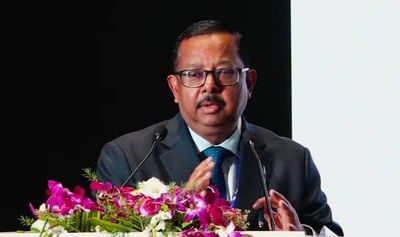
Speaking at the National Law Institute University in Bhopal on 25 July 2026, Supreme Court Justice Ujjal Bhuyan delivered a sharp critique regarding the state of democratic dissent and judicial responses in India. Addressing students at the Justice G.P. Singh Memorial Lecture, Justice Bhuyan raised strong concerns over how routine, peaceful activities and harmless choices are increasingly being treated as criminal offenses. He specifically highlighted the case of 14 young men who spent nearly 3 months in jail after organizing an Iftar gathering on a boat along the Ganga in Varanasi. Questioning the rationale behind their arrest and prolonged incarceration before receiving bail, Justice Bhuyan emphasized that consuming chicken biryani is not a crime under Indian law and urged courts to protect fundamental civil liberties rather than validate unnecessary arrests.
The Supreme Court judge also turned his attention to judicial decisions restricting public demonstrations on global humanitarian crises, specifically referring to a ruling by the Bombay High Court. In that instance, the High Court rejected a plea seeking permission to organize a peaceful demonstration in Mumbai in solidarity with civilians in Gaza, questioning why citizens wanted to protest foreign issues instead of focusing on domestic matters. Justice Bhuyan expressed amusement over such observations, noting that expressing solidarity with suffering communities abroad aligns with global humanitarian values and India's long-standing diplomatic recognition of Palestine. He cautioned that preventing citizens and university students from debating international human rights concerns limits the scope of public discourse and academic freedom.
Beyond specific case examples, Justice Bhuyan raised critical questions regarding the conditions attached by lower courts when granting bail to student activists and political dissenters. He pointed out that imposing broad restrictions—such as barring individuals from speaking at public gatherings or posting opinions on social media platforms—severely undermines basic constitutional rights. In his view, when courts repeatedly attach such heavy constraints, citizens begin to wonder whether the legal system is subtly discouraging public participation and dissent. Addressing judicial ethics more broadly, Justice Bhuyan also warned against post-retirement political assignments for judges, emphasizing that maintaining institutional separation between the judiciary and the executive remains essential to preserve public trust in court decisions.
Taking a broader perspective, these public remarks from a sitting Supreme Court justice highlight growing internal debates within India's judicial machinery regarding civil rights enforcement. While trial courts and local police authorities often cite public order concerns to justify quick arrests or restrictive bail rules, high-level judicial scrutiny underscores the need to prevent overreach. However, striking the balance between maintaining local law and order and safeguarding personal liberty presents continuous legal challenges for judges across the country.
In conclusion, the address delivered by Justice Ujjal Bhuyan serves as an important reminder of the fundamental role of dissent and free expression in a constitutional democracy. By encouraging law students and young lawyers to critically evaluate court judgments, the Supreme Court judge reiterated that institutional strength relies on open scrutiny and public confidence. As debates around personal freedoms continue, his observations emphasize that courts must remain proactive guardians of individual liberty against arbitrary state action.