
Supreme Court Issues Notice To Lok Sabha Speaker Om Birla Over Sena UBT MPs Merger With Shinde Faction
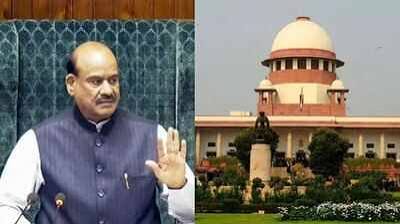
In a significant legal turn on July 22, 2026, the Supreme Court of India officially stepped into the intense political battle between rival political groups in Maharashtra by issuing a formal notice to Lok Sabha Speaker Om Birla. The top court addressed a petition filed by Shiv Sena UBT leader Arvind Sawant, who strongly questioned a circular issued on July 18, 2026. This administrative circular granted approval for 6 elected members of Parliament belonging to the Shiv Sena UBT group to shift their allegiance and join the rival group headed by Deputy Chief Minister Eknath Shinde. A court bench comprising Justice PS Narasimha and Justice Alok Aradhe heard the matter in New Delhi and directed responses from the office of the Lok Sabha Speaker, the Joint Secretary of the Lok Sabha Secretariat, and the 6 concerned lawmakers within a timeframe of 2 weeks. Although the apex court accepted the petition for detailed review, it declined to grant an immediate stay on the decision of Speaker Om Birla, allowing the new strength distribution in the national parliament to remain operational as political activities unfold.
The core dispute stems from a sudden political shift ahead of the parliamentary gathering, where 6 lawmakers out of the total 9 elected under the Shiv Sena UBT banner submitted a joint request seeking recognition as part of the Eknath Shinde led group. These 6 elected leaders included Bhausaheb Wakchaure, Nagesh Patil Ashtikar, Omprakash Raje Nimbalkar, Sanjay Bandu Jadhav, Sanjay Deshmukh, and Sanjay Dina Patil. Their sudden move caused a major shift in strength numbers inside the national assembly, reducing the Uddhav Thackeray led group from 9 members down to just 3 members in the 543 seat house, while simultaneously increasing the parliamentary power of the Eknath Shinde group from 7 members to 13 members. The original political organization voiced strong objections before the parliamentary leadership, emphasizing that party leadership under Uddhav Thackeray had never authorized, initiated, or consented to any structural merger. The petitioner argued that individual members cannot unilaterally declare a party merger under Tenth Schedule regulations without approval from the parent political body that received the public electoral mandate.
This development highlights an ongoing debate surrounding the constitutional sanctity of anti defection provisions designed to protect voter trust. When citizens participate in democratic elections, their votes are cast based on party symbols, public manifestos, and ideological commitments. When elected representatives walk away from their parent party in large numbers to align with opposing political groups, it raises troubling questions about parliamentary ethics and accountability to voters. The current legal challenge argues that allowing a group of elected representatives to claim a merger defense without the official sanction of their organizational leadership creates a loophole in anti defection laws. Critics of this practice point out that if legislative majorities can redefine party structures independently, the foundational authority of registered political parties is weakened, turning electoral results into flexible arrangements rather than firm mandates.
Looking closely at the legal framework, the Tenth Schedule under Paragraph 4 states that a valid merger requires a two thirds majority agreement following an official merger initiated by the main political organization. The defense presented by the rival faction rests on holding more than two thirds of the legislative seats, claiming this majority gives them full legal protection against disqualification. However, this interpretation creates a serious conflict between the original parent organization and its elected representatives. By declining an immediate interim stay, the Supreme Court has preserved the current working order of the House while opening the door for deep judicial scrutiny over the next 2 weeks. The eventual outcome of this case could set a vital legal precedent for Indian democracy, establishing clear boundaries on whether legislative numbers can override party organizational authority or whether political defection laws require stricter enforcement to safeguard public faith.