
Supreme Court Orders Election Commission Action Over Fake Bulk Form 7 Voter Deletions in Uttar Pradesh
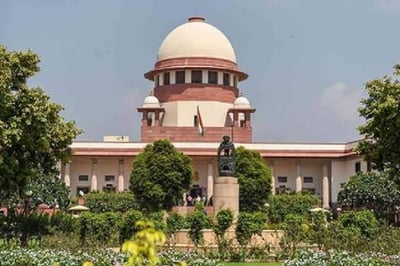
The highest court of the country has stepped in to safeguard voter lists in Uttar Pradesh after serious complaints emerged about attempts to delete genuine citizens from electoral registers in large numbers. During hearings on the special intensive revision of voter lists, the Election Commission of India confirmed to the bench that multiple Form 7 requests had indeed been handed over in bulk packs. Form 7 is the formal document used under election rules to object to an existing name or ask for the removal of a voter from official rolls. The poll authority stated that on-ground verifications proved these bulk applications were false, and electoral officers did not act upon them to strike off any voter.
The legal matter reached the Supreme Court through petitions filed by political representatives, including Member of Parliament Tanuj Punia, challenging the conduct of voter list revisions across key states. When the issue of Uttar Pradesh came up, senior legal counsel appearing for the election body acknowledged that people had tried to submit batches of deletion forms together. The election panel told the judges that field officers conducted field inspections, cross-checked the claims, and found that the allegations made in those forms had no factual basis, leading to their immediate rejection.
Lawyers representing the petitioners countered the official claims, arguing before the bench that the matter goes deeper than simple paperwork errors. The court was informed that in at least one assembly constituency, thirty-two separate deletion requests were submitted targeting members of a specific community. The petitioner pointed out that two of these forms even carried signatures of local booth level officers, indicating clear inconsistencies that require thorough judicial review and official explanation.
The petitioners also brought attention to similar voter deletion controversies that occurred previously in states like Telangana and Karnataka. In those earlier instances, authorities stepped in firmly and ordered police cases against individuals attempting mass deletions. Petitioners argued that because no criminal complaints were registered against fraudsters in Uttar Pradesh, wrongdoers felt encouraged to carry out organized campaigns to strip citizens of their fundamental democratic franchise.
On Friday, October 30, 2026, a Supreme Court bench led by Chief Justice Surya Kant, alongside Justice Joymalya Bagchi and Justice V Mohana, gave clear directions to ensure voter transparency. The court instructed the legal team of the petitioner to hand over a detailed factual note highlighting all uncovered irregularities to the senior counsel representing the poll panel. The judges ordered the election commission to examine the specifics, carry out necessary corrections without delay, and submit an official compliance report before the bench.
The legal proceedings also touched upon ongoing voter revision processes in other states, including Kerala and Chhattisgarh. The bench noted that while general revision timelines must be respected to keep election schedules on track, genuine voters who could not submit their enumeration forms on time should still receive a fair opportunity to secure their voting rights. The judges urged that all representations regarding left-out citizens be considered sympathetically by election authorities.
Voting rights advocates have repeatedly warned that Form 7 is vulnerable to abuse by political operatives seeking to suppress opponent votes in close electoral contests. In many rural and semi-urban pockets, vulnerable voters discover that their names have vanished from booth registers only when they reach polling stations on voting day. Independent legal observers maintain that strictly punishing individuals who submit forged deletion papers is the only reliable way to stop voter suppression.
The top court granted the election commission four weeks to file its detailed counter-affidavit and respond to the specific complaints raised by petitioners. By keeping the petition active and demanding a comprehensive compliance report, the court has made it clear that preserving clean, accurate, and inclusive voter rolls remains a non-negotiable duty for democratic governance.