
Benjamin Netanyahu Faces Deadlock Against Gadi Eisenkot in Israel Election as Voters Debate Gaza War Crimes and Shocking Toll of Dead
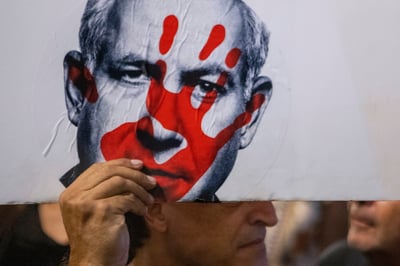
Voters across the country have completed casting their ballots in a deeply divided national election that could decide whether Prime Minister Benjamin Netanyahu remains in power or gets forced out of office. Polling stations closed late in the evening after long lines of citizens waited for hours to register their choices. When early exit poll numbers appeared on major television screens, they showed an extraordinary tie between the ruling coalition and the opposition group led by former army commander Gadi Eisenkot. Neither side holds a clear winning path, creating total political uncertainty and setting the stage for what could become one of the most unpredictable political battles in modern history.
The exit projections reveal that the political camp loyal to Netanyahu and the coalition led by Eisenkot are locked in a near equal share of seats in the parliament. Under the national system, a leader needs sixty one out of one hundred and twenty seats to put together a working government. Because both blocs are hovering just below the necessary majority, nobody can claim a clean victory yet. While party halls were filled with loud songs and flag waving from loyal followers, senior political analysts warn that the country may be headed straight toward weeks of bitter negotiations, backroom horse trading, or even a total failure that forces another quick election.
This election took place under the heavy shadow of immense destruction, ongoing devastation, and profound human loss in the Gaza Strip. Over long months of relentless air strikes, artillery barrages, and ground assaults, health officials and international tracking groups estimate that around seventy thousand people, including thousands of innocent children, women, and men, have been killed. Vast stretches of urban land have been turned to grey rubble. Families have fled from one corner of the strip to another with nowhere safe left to run, while hospitals, clean water networks, and food supply chains have suffered near total collapse.
The sheer scale of this destruction has brought fierce international condemnation and formal legal action against the leadership. Top global legal bodies, human rights monitors, and international courts have raised severe charges of war crimes, collective punishment, and genocide regarding the military campaign in Gaza. Prosecutors at international courts in The Hague have called for arrest warrants for high ranking political leaders, citing the deliberate deprivation of food, clean water, and vital medicine to helpless civilians. Across major cities worldwide, massive crowds have taken to the streets week after week, holding banners of dying children, condemning the attacks, and demanding full accountability for what they view as historic atrocities.
This tragic reality has created an intense and bitter debate across the entire planet about the conscience of the electorate. People in capitals around the world find themselves asking how any leader facing charges of genocide and the deaths of seventy thousand innocent human beings could still receive millions of votes. To millions of outside observers, the idea of returning such a leader to power seems completely shocking and morally indefensible. The debate raises difficult questions about whether ordinary citizens are truly standing behind the military destruction, or whether fear, nationalism, and deep division have blinded voters to the suffering of their neighbours.
Inside the voting country, however, the domestic mindset is shaped by completely different fears, trauma, and political messaging. Millions of conservative, religious, and right wing voters continue to cast their ballots for Netanyahu, seeing him as a tough protector who refuses to bend to foreign pressure. For his dedicated supporters, the horrific military actions are viewed not as war crimes, but as a necessary and uncompromising fight for survival against violent armed groups. To this segment of the population, international criticism from global bodies and Western governments is seen as biased treatment against their homeland, pushing them to stand even closer behind their long time leader.
At the same time, an equally passionate part of the population has completely turned against Netanyahu and placed their hopes in Gadi Eisenkot. Voters in this camp argue that Netanyahu has destroyed the moral standing of the country, isolated it from historical friends, and dragged the entire population into a permanent state of war. Many of these opposition supporters believe that the prime minister prolonged the fighting deliberately, simply to keep his extreme right wing government allies satisfied and avoid his own ongoing domestic corruption trials. For them, walking into the voting booth was a desperate attempt to rescue their country from political ruin and restore basic decency and accountability.
The dramatic split was clearly evident throughout the day as voter turnout surged across every major region. Students, military reservists, working class families, and senior citizens turned out in huge numbers, recognizing that this vote was far more than an ordinary political contest. Arab citizens, who make up a significant portion of the electorate and often feel ignored by mainstream leaders, also organized to cast ballots against far right figures. As election officials work under heavy security to count every single physical paper ballot, even a shift of a few thousand votes could shift a parliamentary seat and completely alter the balance of power.
Both main contenders stepped up to speak to their followers as midnight approached, projecting confidence while facing an uncertain road ahead. Netanyahu addressed a loud gathering of party loyalists, praising their determination, insisting that his party remains the strongest single force in the country, and declaring that he would fight on. A short distance away, Eisenkot spoke to energetic supporters, stating that the public has rejected the failed leadership of the past and called for genuine change, national healing, and an end to divisive rule.
If Benjamin Netanyahu manages to secure a victory through clever political deals with smaller extremist parties, the global shockwaves will be immediate and severe. A win for him would force the international community to face the painful question of whether the population knowingly chose to endorse a leader charged with horrific war crimes and genocide against innocent children, women, and men. While leaders across the world often claim they know better who should win for the sake of global peace, the ballot boxes tell a far more complicated story. Whether the country chooses to double down on war or search for a completely new direction, this razor thin result proves that society is standing on the edge of a deep and dangerous divide with no easy way forward.