
Supreme Court Steps In To Order Uttar Pradesh Police To Present Noida Protest Accused Over Shocking Custodial Torture Allegations
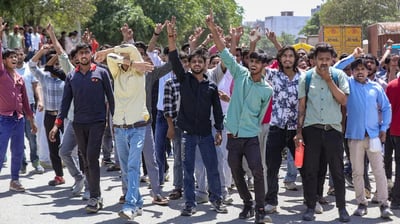
The top judicial forum of the country has intervened decisively in a high profile criminal matter originating from the industrial sectors of Gautam Buddh Nagar. A Supreme Court bench consisting of Justice B V Nagarathna and Justice Ujjal Bhuyan has formally ordered the Uttar Pradesh state authorities to physically produce two arrested individuals Aditya Anand and Rupesh Roy before the court. The sudden judicial directive follows a critical writ petition filed by Keshaw Anand who happens to be the biological brother of one of the chief accused men. The petitioner legal team has put forward alarming assertions stating that the local police administration subjected the detained professionals to extreme physical violence and systematic custodial abuse after picking them up in connection with the widespread labor agitation that disrupted local commercial operations last month.
The massive industrial dispute dates back to the middle of April when thousands of factory workers gathered across multiple corporate locations to demand uniform minimum wage updates, overtime compensation, and better workplace safety safeguards. The local administration claims that the large scale demonstration was intentionally hijacked by an organized syndicate of external elements who used online messaging channels to instigate vandalism, vehicle burning, and stone pelting against security forces. Following the clashes the local police executed mass crackdowns, arresting dozens of activists including Aditya Anand who is an engineering graduate from a premier national institute and runs a library network for underprivileged children. While law enforcement labels him as a core mastermind behind the public disorder his legal counsel senior advocate Colin Gonsalves maintains that his clients merely addressed the labor force to explain standard statutory rights while actively urging participants to maintain absolute peace.
The unfolding courtroom battle has highlighted deep institutional friction regarding the handling of civil protests and the structural protection of civil liberties. During the arguments senior advocate Gonsalves raised critical questions about the transparency of the state action, seeking a completely independent investigation into the alleged lockup violence and pointing out that local legal representatives attempting to assist the accused were facing physical obstruction and direct harassment. The state government legal counsel strongly rejected all claims of high handedness, presenting administrative medical reports to argue that no external bodily injuries were recorded. The state insists that all mandatory procedural safeguards including the timely delivery of formal arrest memos and transit remand protocols were executed in complete alignment with statutory requirements.
This significant case has attracted widespread attention due to the invocation of exceptional security laws against multiple activists and media professionals linked to the labor movement. While the state prosecution has argued that the escalation of the protest required strict containment measures to protect industrial infrastructure, the supreme court firm directive to physically inspect the condition of the detainees highlights an essential constitutional check on executive authority. The bench noted during the session that voicing demands for fair wages represents a fundamental democratic right that cannot be treated as a criminal enterprise. As the deadline approaches for the physical production of the detainees the outcome of this direct judicial intervention will set a major precedent for administrative accountability and police transparency during industrial labor disputes.