
Telangana Hikes Auto Fares for First Time in 12 Years Setting Minimum Rate at Rs 30
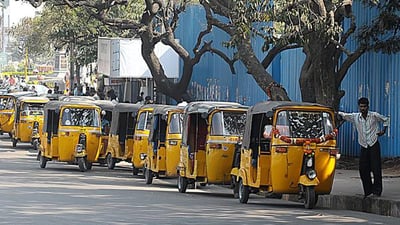
Daily commuters across Telangana will now have to pay higher charges for autorickshaw rides as the state government has officially notified revised meter tariffs. Under the new rate structure, the base minimum fare has been increased from twenty rupees to thirty rupees for the initial distance of one point six kilometres. Every subsequent kilometre traveled will cost passengers fourteen rupees, up from the earlier rate of eleven rupees. The notification issued by the state transport department marks the very first revision of passenger autorickshaw fares in over a decade.
The last comprehensive fare revision took place back in February 2014, prior to the formation of the state. Over the past twelve years, drivers and operator unions have staged repeated protests and strikes, citing steep increases in fuel rates, routine mechanical servicing, spare parts, and general household costs. While compressed natural gas and liquefied petroleum gas prices soared over the years, the official government fare structure remained frozen, causing frequent arguments between drivers and commuters over arbitrary meter charges and extra ride demands.
The fresh government order issued by the special chief secretary of the transport department also updates several supporting travel charges. Waiting or detention fees have been set at seventy-five paise per minute when vehicles are stopped in heavy traffic or requested to wait. Furthermore, nighttime journeys taken between eleven at night and five in the morning will attract an extra fifty percent charge over standard daytime meter readings. Luggage rates have also been revised to fifty paise per package, while retaining a maximum luggage allowance of one hundred kilograms per passenger ride.
To ensure total transparency on the road, authorities have directed all autorickshaw operators to recalibrate their digital fare meters according to the new tariff within three months. Until existing digital meters are physically updated and certified by the weights and measures department, drivers are required to display an approved government tariff comparison chart clearly inside the passenger cabin. This allows riders to verify the exact revised cost corresponding to the older meter reading during the transition phase.
The fare hike was finalized following extensive consultations between transport minister Ponnam Prabhakar, administrative officials, and representatives from different transport unions. Earlier, app-based drivers and traditional autorickshaw federations had threatened to launch an indefinite statewide transport strike to press their demands. While the planned strike was called off after ministerial assurances, a special committee was constituted to study operational expenses and recommend sustainable price adjustments.
Despite the upward revision, driver unions have expressed mixed reactions to the official announcement. The Joint Action Committee representing autorickshaw drivers stated that the approved increase fails to match the real burden of rising living costs. Union leaders pointed out that they had formally requested a base fare of forty rupees and nineteen rupees for each subsequent kilometre. Meanwhile, representatives of the Bharatiya Mazdoor Sangh criticized the decision as one-sided and announced three days of peaceful protests to demand a minimum fare of fifty rupees.
Transport authorities have assured the unions that other welfare measures are currently being examined to protect the livelihood of traditional vehicle operators. These include setting up a dedicated welfare board for transport workers, taking strict action against unauthorized commercial vehicles entering from neighboring districts, and regulating app-based two-wheeler bike taxi operations across city roads.
For millions of everyday passengers who depend on autorickshaws for last-mile connectivity between home, bus stops, and metro stations, the revised tariffs will mean higher daily commuting budgets. Nevertheless, transport planners hope that the official revision will encourage operators to run strictly by the meter, reducing disputes on the street and ensuring fair earnings for honest drivers.