
Umar Khalid Detention Criticized By Former Delhi High Court Chief Justice AP Shah In Goa Address
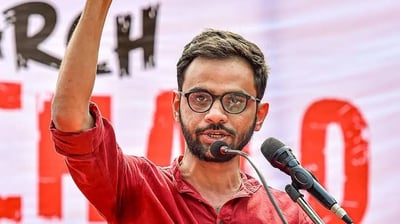
A former top judicial figure has raised major concerns regarding civil liberties, political dissent, and judicial independence across India. Speaking at an event titled Judicial Role in Protecting Civil Liberties organized by the High Court Bar Association in Goa on 31 July 2026, former Chief Justice of the Delhi High Court Justice AP Shah delivered a strong speech criticizing the continuous imprisonment of political activists. The retired judge specifically highlighted the case of 38 year old student activist Umar Khalid, who has been held in Tihar Jail since September 2020 under the stringent Unlawful Activities Prevention Act in connection with the February 2020 Delhi riots conspiracy case. Justice AP Shah pointed out the stark contrast between how the legal system treats political voices and how it handles convicted or accused violent criminals in the country.
During his address, the former chief justice expressed deep worry that the number of independent minded judges across the Indian judiciary is shrinking at an alarming rate. He emphasized that one of the most publicized detentions in recent history remains that of Umar Khalid, who has been awaiting trial for nearly 6 years without conviction. Justice AP Shah observed that while political dissenters languish behind bars for extended periods, individuals facing charges for severe violent crimes, including convicted murderers and a prominent godman from northern India, frequently secure bail or sentence remissions. He argued that using laws like the Unlawful Activities Prevention Act to shut down political criticism rather than engaging in constructive democratic dialogue reflects a troubling pattern of suppressing dissenting voices.
Expanding his criticism beyond individual bail cases, the retired judge flagged broader institutional failures within the justice mechanism regarding freedom of speech and constitutional rights. He brought attention to the sharp rise in arbitrary state action, particularly mentioning extrajudicial bulldozer demolitions of residential properties. Pointing to statistical data, Justice AP Shah noted that between 2019 and 2023, the nation witnessed a 317 percent increase in forced demolition related evictions. He further highlighted that 89 percent of the homes demolished during 2022 and 2023 belonged to marginalized groups, including Scheduled Castes, Scheduled Tribes, Other Backward Classes, and Muslim communities. He criticized instances where executive authorities effectively act as investigator, prosecutor, judge, and executioner simultaneously without adhering to due judicial process.
The former high court judge also questioned the enforcement of judicial guidelines, noting that even when higher courts issue clear rules against illegal demolitions, lower courts and state authorities often fail to enforce them effectively. He cited instances where peaceful student protesters face criminal charges and police action for demanding political accountability, while critical news outlets undergo lengthy tax audits and financial scrutiny designed to create hardship. Justice AP Shah stated that judges do not need to act as heroic activists, but simply need to perform their duties independently and fearlessly by upholding constitutional morality, the rule of law, and principles of natural justice.