
US Midterm Election Results Impact World Economy Security and Trade Agreements from Iran to Asia
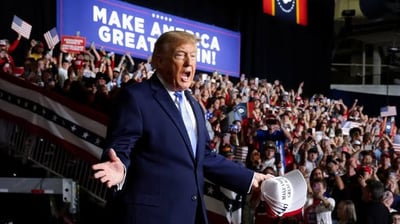
The outcome of the United States midterm elections has created a powerful chain reaction that stretches far beyond the borders of North America. While voters cast their ballots to pick lawmakers for their local districts and states, the collective decision has effectively rearranged the political board for global leaders, multinational businesses, and ordinary families across every continent. Because Washington commands the world’s largest consumer economy and its most expensive defense apparatus, any shift in legislative power directly influences how international pacts are funded, how sea trade routes are safeguarded, and how diplomatic standoffs are managed.
At the center of global attention is the dramatic turning point for military actions in the Middle East. Over recent months, intense military exchanges, missile threats, and confrontations around sensitive sea passages have disrupted regional stability and pushed global fuel prices upward. When one party loses its command of the national assembly, the White House loses its guaranteed access to open-ended defense funding. Lawmakers who take over key committees can delay emergency spending bills, question military choices, and push for a diplomatic off-ramp rather than continuous combat. In Tehran and other regional capitals, leaders are closely studying these results, knowing that an administration constrained by a divided legislature has a much narrower margin to wage prolonged overseas conflicts.
The election outcome also touches the everyday pockets of citizens worldwide through global energy trade. The Persian Gulf, and in particular the narrow Strait of Hormuz, serves as the main transit corridor for roughly twenty percent of the world’s petroleum supplies. When geopolitical tensions in the region stay elevated, maritime insurance premiums surge, and shipping lines add heavy risk fees that raise the final price of every barrel of oil delivered to global ports. Countries like India, which import nearly ninety percent of their domestic oil requirement, face immediate economic pressure whenever supply routes are threatened. A shifting balance of power in Washington that reins in aggressive military maneuvers could help lower insurance costs, keep shipping lanes moving, and prevent sudden spikes in petrol and diesel prices for everyday motorists.
International commerce and import taxes represent another crucial front being reshaped by the legislative change. Over recent cycles, threats of across-the-board tariffs and border duties have created massive uncertainty for manufacturing hubs in Asia, Europe, and Latin America. When a single political party controls both the executive branch and parliament, sweeping trade penalties can be quickly passed into law or backed with administrative power. However, when control of the national legislature splits, international trade policy faces intense domestic scrutiny. Opposition lawmakers represent states whose farming communities, auto makers, and tech exporters suffer painful losses when foreign nations strike back with retaliatory duties on exported goods.
For major exporting nations across the developing world, the new balance in Washington could mean greater predictability in trade guidelines. Textile workers in Bangladesh, electronics assemblers in Vietnam, and manufacturing laborers in India depend heavily on access to the American consumer marketplace. Sudden increases in import levies disrupt factory production lines, delay container ships, and risk factory closures that throw thousands of low-income workers out of daily jobs. With legislative oversight now divided, impulsive broad-scale trade wars become much harder to sustain without facing fierce pushback from lawmakers defending domestic industries that rely on smooth global supply chains.
The shift in Washington also brings major consequences for international security alliances and foreign aid programs. For decades, European partners within the transatlantic defense alliance and key allies in Asia looked to the American legislature for reliable, bipartisan funding pledges. When power flips, foreign assistance budgets face intense review. Recent decisions to halt multi-billion dollar annual security grants to long-term allies demonstrate how quickly long-standing financial agreements can unravel when domestic priorities change. Allied governments across Europe and Asia are now recognizing that they must take greater responsibility for their own regional defense rather than expecting guaranteed subsidies from Washington indefinitely.
Global climate commitments and transition policies will likewise feel the weight of this election result. The world’s biggest international agreements to curb carbon pollution and invest in green energy technologies rely heavily on federal tax credits, funding grants, and regulatory standards passed by lawmakers. A divided legislative body often leads to deep budget gridlock, making it almost impossible to pass sweeping new environmental packages or approve heavy foreign aid contributions to global climate funds. Developing nations seeking financial assistance to build solar grids, flood defenses, and clean water plants may find international aid streams slowing down, forcing local governments to fund environmental resilience through their own domestic reserves.
For everyday citizens living in developing economies, the results are a clear reminder of how interconnected modern lives have become. A single election held thousands of miles away can dictate the interest rates set by world central banks, the value of domestic currencies against the dollar, and the price of grain and cooking fuel at the local market stall. While domestic politics in Washington may seem distant to someone walking down a street in Asia or Africa, the laws passed, the trade penalties avoided, and the conflicts restrained by the new legislative balance will shape the cost of living and the security of jobs across the entire globe for years to come.