
US Singapore UAE Rank Ahead Of UK In Global Wealth Management Index As Macroeconomic Pressures Drag British Market
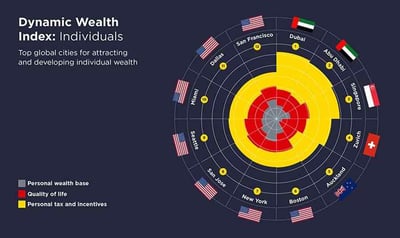
A significant realignment in global financial power dynamics was highlighted on 4 August 2026 following the official release of the Wealth Management Index by Zurich headquartered banking software provider Avaloq. The comprehensive study evaluated structural competitiveness across 15 major international financial jurisdictions using 60 distinct data indicators. According to the research findings, modern wealth management hubs like the United States, Singapore, and the United Arab Emirates have successfully pulled ahead of traditional European centers like the United Kingdom. Rather than simply measuring raw assets under management or total market size, the framework analyzed long term growth conditions across 5 primary pillars: macroeconomic conditions, financial market maturity, demographic trends, regulatory environments, and technology adoption. The comparative data demonstrates how emerging financial capitals are successfully capturing private capital momentum by combining agile digital infrastructures with favorable economic policy environments.
The performance metrics across the top ranked nations highlight distinct competitive advantages that appeal to international investors and private wealth managers. Singapore secured top marks by delivering exceptionally balanced performance across all 5 evaluation pillars, solidifying its standing as Asia Pacific premier wealth destination. Meanwhile, the United States stood out for its unrivaled capital market depth, high trading participation, and dynamic investment ecosystem. The United Arab Emirates made rapid gains due to favorable demographic expansion and aggressive adoption of cutting edge fintech infrastructure. In contrast, the United Kingdom was relegated to the middle tier of global performance, facing structural economic constraints despite maintaining world class capital market infrastructure.
A detailed look at the British profile reveals a clear disconnect between historical institutional strength and current macroeconomic stability. The United Kingdom achieved high marks for financial market maturity, robust regulatory frameworks, and advanced digital adoption across established private banks. However, persistent inflationary pressures, sluggish national economic growth, and fiscal uncertainty severely weighed down its macroeconomic scores. Industry analysts noted that while London retains its reputation for regulatory excellence and deep talent pools, macroeconomic headwinds prevent the jurisdiction from fully translating its financial sophistication into competitive momentum. Similar economic drag was observed across other traditional European wealth centers like Switzerland and Luxembourg, which also struggle with elevated living expenses and slower domestic expansion.
The shift in ranking offers valuable operational signals for global private banks and wealth management firms making strategic capital allocation decisions. As high net worth individuals and global families increasingly seek cross border diversification, wealth managers are reallocating resources toward regions offering stable macroeconomic policies and rapid technological execution. To defend its historical leadership, the British financial sector must focus on streamlining digital client experiences and driving operational efficiencies while navigating domestic economic challenges. The index findings confirm that while traditional European centers maintain strong institutional foundations, modern growth hubs in the Americas, Asia, and the Middle East are actively defining the future landscape of global private wealth.