
Venezuela Earthquake Disaster Death Toll Hits 920 As New 4.9 Tremor Rocks Coast
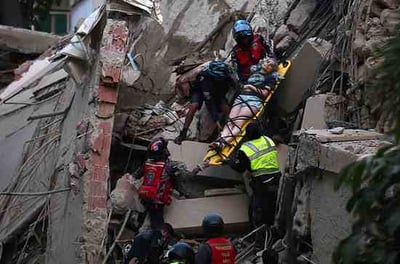
Venezuela faces an escalating humanitarian crisis as a new 4.9 magnitude tremor struck off its northern coast, sending fresh waves of panic through a population already devastated by a historic natural disaster. This latest seismic activity occurred just 2 days after 2 massive back-to-back earthquakes measuring 7.2 and 7.5 on the Richter scale flattened entire neighborhoods across north-central regions on Wednesday evening. The official death toll has rapidly climbed to 920 people, while more than 4500 individuals are reported injured and tens of thousands remain missing under the rubble. The 4.9 magnitude aftershock, originating at a depth of 35 kilometers and centered 80 kilometers west of the capital city Caracas, shook buildings and forced traumatized residents to flee into the streets once again. Families who had spent 48 hours searching for their loved ones were forced to halt rescue efforts temporarily, compounding the emotional trauma of an already horrific week. Emergency response teams face a massive challenge as the continuous shaking threatens structures that are already on the verge of total collapse, making the race against time even more dangerous for survivors trapped below the debris.
The scale of destruction left by the initial 2 earthquakes has overwhelmed local emergency infrastructure across major states including Yaracuy, Carabobo, Miranda, and La Guaira. The 7.2 magnitude foreshock hit near San Felipe, followed a mere 39 seconds later by the catastrophic 7.5 magnitude mainshock near Moron, making it the strongest seismic event recorded in Venezuela in over 125 years. Hospitals in Greater Caracas are operating well beyond their capacity, treating thousands of patients with severe injuries while dealing with intermittent power outages and broken water supplies. Major transport routes have been cracked open, bridges have collapsed, and telecommunication networks remain highly unstable, leaving several impacted communities completely cut off from the rest of the country. International rescue teams from multiple nations have started arriving to assist local firefighters and the Venezuelan Red Cross, bringing specialized tools and canine units to detect signs of life beneath collapsed high-rise buildings and homes. The government has officially declared a nationwide state of emergency, suspending all non-essential activities and shifting every available resource toward the disaster zones where rescue workers have not slept for 3 days.
Looking closely at the situation, the immense level of devastation cannot be blamed solely on the shifting of tectonic plates along the Caribbean and South American boundary. The catastrophe highlights severe gaps in urban planning, weak enforcement of modern building codes, and the long-term degradation of public infrastructure that has plagued the nation for over 10 years. Many residential structures in high-density urban areas were built without earthquake-resistant engineering, transforming them into instant death traps when the 7.5 magnitude shockwave rippled through the ground. Furthermore, the economic difficulties experienced by the country over the last 10 years mean that emergency services were already underfunded, lacking the heavy machinery, advanced technology, and medical stockpiles necessary to handle a disaster of this scale. The breakdown of basic utility services like electricity and clean water within minutes of the tremor shows how vulnerable the national grid is, slowing down critical operations at hospitals when every 1 minute matters for saving a life. This tragic event serves as a stark warning about the high human cost of neglecting infrastructure maintenance and failing to prepare vulnerable populations for predictable geological hazards.
To move forward and recover from this nightmare, the immediate focus must remain on saving the thousands of people who are still unaccounted for while providing urgent shelter to those left homeless. Rebuilding the destroyed regions will require billions of dollars and a level of international cooperation that goes beyond political differences, as local resources are simply not enough to reconstruct entire cities. The Venezuelan Red Cross and global relief agencies are working around the clock to distribute food, clean drinking water, and temporary tents, but the risk of disease outbreaks grows larger every day that public utilities remain offline. In the coming months, the government must prioritize a complete overhaul of its safety regulations and invest in early warning tracking systems to protect citizens from future tectonic movements. Ultimately, the true measure of recovery will not just be how fast the rubble is cleared from the streets of Caracas, but whether the nation can rebuild stronger, safer, and more resilient communities that can withstand the unpredictable forces of nature.