
Abdul El Sayed Wins Michigan Senate Primary Shaking Democratic Party Establishment
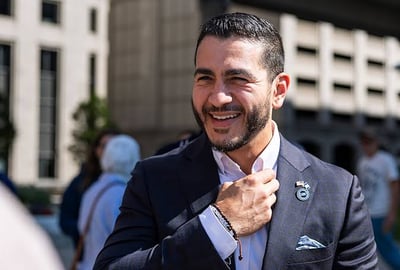
Political shockwaves reverberated across the American political landscape after progressive champion Dr Abdul El Sayed clinched a hard fought victory in the Michigan Democratic primary for the United States Senate. Defeating four term congresswoman Haley Stevens in a closely watched contest, El Sayed overcame staggering financial odds in what became the most expensive Senate primary in American history. Outside political action committees and conservative donor networks poured nearly seventy million dollars into television advertisements and digital campaigns designed to stop his insurgent momentum. Despite being outspent by an eleven to one ratio, the former Detroit public health director built a formidable grassroots coalition powered by tens of thousands of local volunteers who knocked on over two hundred thousand doors across the battleground state. The result marks a major turning point for the Democratic Party, demonstrating that progressive populist messages centered on healthcare reform and corporate accountability can triumph over entrenched party leadership and massive corporate spending.
The primary contest served as a referendum on the ideological trajectory of the Democratic Party following recent national political shifts. Stevens, a pragmatic lawmaker who previously served as chief of staff on the federal auto rescue task force under President Barack Obama, drew firm endorsements from party leaders including Senate Minority Leader Chuck Schumer and outgoing Michigan Governor Gretchen Whitmer. Supported heavily by groups such as the American Israel Public Affairs Committee and corporate political action committees, her campaign stressed electability and traditional legislative experience in a crucial swing state. Conversely, El Sayed anchored his campaign on three core promises, demanding an end to corporate money in politics, calling for universal Medicare for All, and advocating for an immediate halt to overseas military aid. Backed by national progressive figures such as Senator Bernie Sanders and Representative Alexandria Ocasio Cortez, El Sayed galvanized younger voters, union workers, and diverse suburban communities who felt increasingly disconnected from mainstream establishment politics.
As election night returns trickled in from Wayne County and metropolitan Detroit, the race initially remained too close to call, reflecting deep internal divisions within the primary electorate. Late night tallies from key urban precincts eventually pushed El Sayed ahead, securing a narrow but decisive margin that forced Stevens to issue a formal concession call the following morning. In her concession remarks, Stevens pledged her support to El Sayed, urging party members to set aside primary disagreements and unite ahead of the general election. Addressing hundreds of cheering supporters gathered at the Majestic Theatre in Detroit, El Sayed emphasized unity while reaffirming his commitment to systemic change. He told the crowd that the victory belonged to working class families who proved that organized people can defeat organized money when given a clear choice.
The outcome sends strong tremors through the national Democratic establishment, raising urgent questions about strategy, candidate selection, and financial influence in upcoming elections. Moderate strategists had long argued that nominating a progressive candidate with bold structural proposals could jeopardize the seat in a general election in Michigan. However, the primary results proved that working class voters across industrial cities and rural counties responded passionately to message points challenging corporate monopolies and rising living costs. The victory also marks a historic personal milestone, as El Sayed stands on the threshold of potentially becoming the first Muslim elected to the United States Senate. His success suggests that grassroots mobilization and clear ideological contrasts can effectively counter heavy advertising blitzes funded by special interest groups.
Attention now turns to the crucial November general election, where El Sayed will face Republican nominee Mike Rogers for the seat being vacated by retiring Democratic Senator Gary Peters. Rogers, a former congressman who ran unopposed in the Republican primary, enters the race with significant national conservative backing and substantial financial reserves. National political analysts rate the Michigan Senate contest as a tossup that will likely decide control of the upper chamber of Congress. To secure victory in November, El Sayed must build a broad coalition that bridges the gap between his passionate progressive base and moderate suburban voters who supported Stevens during the primary. With both national parties preparing to spend hundreds of millions of dollars in the state over the coming months, the upcoming campaign will test whether a populist grassroots movement can transform primary momentum into a decisive general election triumph.
The dramatic primary result underscores a profound transformation within state political dynamics that will echo far beyond the borders of Michigan. By demonstrating that a campaign funded entirely by individual small donors can defeat unprecedented super PAC spending, El Sayed has provided a potential blueprint for progressive challengers across the country. As national leaders digest the political implications of this primary victory, the focus shifts to whether the party can channel this newly mobilized energy to maintain its senate presence and present a unified front against conservative opponents in the general election.