
US Munitions Stockpile Remains Strong Says White House Rejecting Shortage Reports
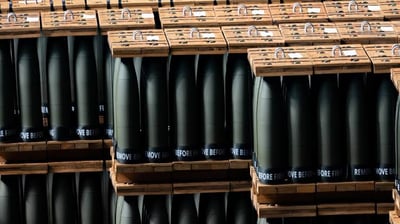
Senior United States officials and President Donald Trump have launched a concerted pushback against widespread reports alleging that ongoing military operations in the Middle East have dangerously depleted national munitions stockpiles. Following weeks of intense media scrutiny and private warnings from defense analysts regarding dwindling inventories of advanced air defense interceptors and long-range precision missiles, the White House and top Pentagon leadership forcefully rejected assertions that American defense capabilities are compromised. President Trump publicly dismissed claims of critical shortages, asserting that the United States maintains ample military reserves and that domestic defense manufacturing is expanding at an unprecedented pace to meet current and future operational demands. Official spokespersons reiterated that the armed forces possess every resource required to carry out missions ordered by the commander in chief, seeking to reassure international allies and quiet domestic political debate surrounding military readiness.
The pushback comes on the heels of several investigative media reports and independent defense assessments suggesting that months of sustained missile engagements have severely strained stockpiles of critical weapons systems. According to analyses published by independent research organizations such as the Center for Strategic and International Studies, extensive deployments of Patriot interceptors, Terminal High Altitude Area Defense systems, Precision Strike Missiles, and Army Tactical Missile Systems have reduced available inventories to a fraction of pre-conflict levels. Analysts estimated that high-intensity air defense operations against drone and missile salvos consumed hundreds of key interceptors faster than defense contractors could assemble replacements. Private briefings presented by military leaders to congressional panels reportedly cautioned that continuing high rates of expenditure could impair long-term strategic readiness in other global theaters, including the Asia Pacific region. These warnings raised alarm across Capitol Hill, where lawmakers from both parties questioned the sustainability of prolonged high-tempo military commitments without immediate industrial scaling.
In response to these growing concerns, President Trump issued strong public statements defending the state of national military preparedness while criticizing media coverage of defense logistics. Speaking through official social media channels and direct statements to national news outlets, the president insisted that the nation holds massive reserves of specialized munitions and that fresh supplies are actively moving through supply lines. Addressing concerns over industrial capacity, the White House highlighted that defense manufacturers across the country are currently building new manufacturing plants and expanding existing facilities at an extraordinary rate. Furthermore, administration officials declined to publicize precise numerical figures regarding current inventory levels or specific missile usage rates, citing vital national security protocols that prevent sharing sensitive operational intelligence with foreign adversaries during ongoing military operations.
Military spokespersons at the Pentagon reinforced the administration stance, affirming that the United States military retains overwhelming combat power and operational flexibility across all global commands. Defense Department representatives emphasized that operational strategies are continually adjusted to optimize resource management without compromising tactical objectives or troop safety. While acknowledging that high-technology precision munitions inherently require longer manufacturing cycles compared to conventional ordnance, military planners insisted that strategic reserves earmarked for core national defense priorities remain fully protected. Officials also pointed out that accelerated procurement contracts and legislative support from Congress are speeding up the delivery of advanced replacement systems, ensuring that replenishment timelines are significantly shorter than external critics predict.
Despite official assurances, the debate surrounding weapons stockpiles has sparked broader discussions regarding national defense industrial base readiness and long-term security strategy. Security experts point out that modern high-intensity conflicts consume precision-guided munitions at rates far exceeding peacetime manufacturing estimates, creating structural challenges for military logistics. Congressional leaders continue to debate emergency funding measures designed to expand production lines, streamline supply chain bottlenecks, and incentivize defense contractors to increase output capacity. As administration officials push back against narrative claims of military vulnerability, the focus remains firmly on balancing active operational commitments with the strategic necessity of maintaining robust defense inventories capable of responding to sudden global contingencies.