
Abhijeet Dipke Launches Indefinite Hunger Strike In Delhi As Police Relocate Weakened Sonam Wangchuk To Hospital
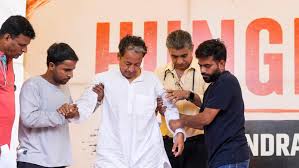
The heart of the national capital turned into a high stakes political battleground when Cockroach Janta Party founder Abhijeet Dipke announced his decision to launch an indefinite hunger strike. This major development unfolded on 18 July 2026 at the historic Jantar Mantar protest site in New Delhi. The dramatic escalation transpired shortly after the Delhi Police swept into the demonstration arena to forcefully relocate renowned climate activist and educator Sonam Wangchuk to Safdarjung Hospital. Law enforcement personnel executed the early morning operation by cordoning off the area with white sheets and moving the weakened 59 year old activist away from the main stage, triggering immediate pandemonium among gathered supporters. While authorities stated the intervention was necessary due to his rapidly failing health parameters after 21 days without food, the sudden police action instantly injected fresh volatility into the ongoing public agitation.
The friction between democratic assembly and administrative intervention reached its peak as young activists clashed verbally with security forces during the eviction drive. Following his removal, Abhijeet Dipke publically declared that he would assume the mantle of the protest by refusing all sustenance until the government addresses their core demands. The youth leader alleged that he was physically assaulted and briefly detained by security personnel during the morning crackdown, accusations that senior police administrators quickly dismissed as standard procedural resistance. The broader student community gathered at the venue has been maintaining a continuous agitation for 26 days to press for structural transparency and the immediate accountability of top education ministry officials regarding competitive examination leaks. The continuous camp has gathered extensive momentum with key public figures and local citizens arriving daily to express deep systemic dissatisfaction with national evaluation bodies.
This intense standoff brings crucial questions regarding state authority and the constitutional validity of peaceful resistance under sharp public scrutiny. The administration utilized a specific directive from the regional high court instructing institutional medical professionals to ensure the protection of human life, using it as legal backing to justify removing the fasting icon from the public eye. Legal commentators observe that using safety mandates to disperse active resistance zones creates an uncomfortable paradox where health preservation acts as an administrative mechanism to systematically weaken public mobilization. By stepping into the vacuum left by the hospitalized activist, the younger leadership demonstrates a calculated strategy to maintain institutional pressure ahead of their scheduled national march toward the parliament building on 20 July 2026. This shift changes the operational dynamic of the movement, moving it from a localized Himalayan statehood and ecological debate into a broader nationwide confrontation led by digital youth networks demanding institutional answers.
The evolving crisis leaves the central governance machinery facing a delicate situation as institutional health bulletins indicate critical dehydration risks for the hospitalized activist who continues to reject medical fluids. Family members have strictly cautioned medical staff against administering involuntary nutritional support without formal consent, emphasizing that the ideological fight remains completely active despite the physical separation from the protest venue. The continuation of the fast by secondary leadership structures ensures that the symbolic momentum of the movement remains completely intact rather than dissolving with the removal of its primary figurehead. As regional political groups extend solidarity to the student collective, the upcoming days will determine whether the administration initiates structural dialogue or relies on security protocols to contain the growing dissatisfaction rippling across the national student community.