
Aditya Birla Health Insurance claim rejection viral post exposes medical necessity excuse for normal fever hospitalization
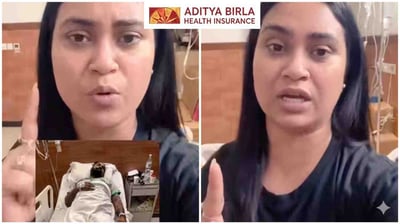
The trust between Indian health insurance consumers and major insurance providers is facing a major crisis following a viral social media post that has captured the attention of millions of policyholders. A user named Anuradha shared a distressing account on the platform X detailing how a woman who bought an Aditya Birla Health Insurance policy for her brother was left stranded during a medical emergency. The family paid a massive premium of 65000 rupees expecting complete financial safety. However, when the brother fell seriously ill and had to be hospitalized for 5 days, the insurance company completely rejected their hospitalization claim. Instead of providing the promised cashless financial relief, the insurer reportedly questioned the decision of the treating doctors, leaving the family to handle the heavy financial pressure alone.
The primary justification given by the insurance firm for this denial relies on a highly controversial clause known as the lack of medical necessity. According to the viral post, the insurance company boldly claimed that the patient was only suffering from a normal fever and asserted that he would easily get better at home. This excuse completely ignored the fact that qualified medical practitioners physically examined the patient and deemed a 24-hour hospital admission necessary for 5 entire days. Anuradha summarized the immense frustration of thousands of families by stating that insurance companies make grand promises at the time of sale, but when it comes to claims, their excuses are even grander. This specific phrase triggered a massive wave of responses online, with hundreds of users sharing identical experiences where corporate desk doctors sitting in remote offices overrule on-ground medical specialists just to protect corporate profit margins.
A deeper analysis of the Indian health insurance sector reveals that this incident is not an isolated error but rather a systemic strategy used across the insurance market. Corporate insurers regularly use internal medical teams to scrutinize files for common conditions like viral fever, dengue, or malaria. If a patient is stable or receiving oral medications and routine intravenous fluids, the claims department frequently rubber-stamps a rejection by stating the treatment could have been managed on an outpatient basis. This practice represents a clear conflict of interest where corporate profit goals clash directly with patient care. While insurance companies must protect themselves against genuinely fraudulent claims, treating every viral fever admission as a voluntary vacation by an over-cautious patient is a dangerous approach that puts public health and consumer trust at severe risk.
From a regulatory and legal standpoint, the argument that a fever can simply be treated at home holds very little ground in a consumer court. The Insurance Regulatory and Development Authority of India along with multiple landmark judgments from state and national consumer forums have repeatedly declared that an insurance company cannot arbitrarily overrule the clinical judgment of an attending physician. A treating doctor evaluates real-time vital signs, dehydration risks, blood platelet counts, and potential complications before assigning a hospital bed. When corporate entities use aggressive marketing to collect high premiums like 65000 rupees but retreat behind fine-print excuses during a 5-day crisis, it demands stricter regulatory intervention. Policyholders facing such arbitrary rejections must actively collect formal medical justification letters from their hospitals, file internal grievances, and swiftly escalate the matter to the Insurance Ombudsman or local consumer courts where legal precedents heavily favor the consumer.