
Madhya Pradesh Woman Delivers Four Babies In Autorickshaw All Newborns Die Why BJP Govt In North India Not Serious About Rural Healthcare ?
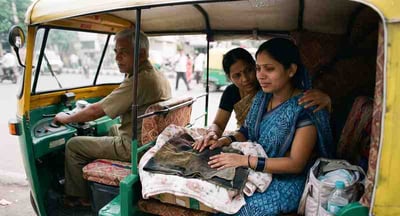
A devastating medical tragedy in Mandla district of Madhya Pradesh has exposed major cracks in rural emergency healthcare, leading to intense scrutiny over state resource allocation. On July 7, 2026, a pregnant woman named Rajni Singaram, a resident of the remote Naigaon area, suddenly experienced severe labor pains during her 7th month of pregnancy. Her family frantically called the state-run emergency ambulance services multiple times, but their urgent appeals went entirely unanswered. Desperate to save the mother and the unborn infants, her husband Ganesh Singaram scrambled to find alternative transit, eventually placing her into a private autorickshaw to reach the nearest community health center in Bichhiya. Tragically, the bumpy, delayed transit proved too distressing, forcing the woman to deliver her quadruplets, 3 girls and 1 boy, inside the cramped vehicle. All 4 premature infants succumbed shortly after birth due to a critical lack of immediate neonatal care, plunging the rural family into absolute grief and igniting widespread local protests against the state medical machinery.
The heart-breaking loss has fueled massive public anger against institutional neglect in the region. District Chief Medical and Health Officer Dr. D.J. Mohanty stated to the press that the babies, weighing around 1.5 kilograms each, died primarily due to extreme premature delivery complications and incomplete biological development. The medical administration claimed that the mother was initially evaluated at a minor primary health center in Ghuthas before being referred further due to her critical, high-risk status. However, the grieving father has openly challenged this institutional narrative, asserting that if a proper emergency ambulance equipped with oxygen and basic medical support had arrived on time, his 4 children would have easily survived the journey. The localized failure of the free emergency transit network highlights a deep operational disconnect, where grand political promises regarding maternal welfare completely fail on the ground due to broken toll-free dispatch systems, missing vehicle fleets, and an absolute shortage of basic paramedic staffing in remote tribal belts.
Looking at this incident from a broader governance perspective reveals a deeply troubling pattern regarding rural infrastructure management. Opposition leaders and local social activists have pointed out that despite repeated official claims of a double-engine government delivering development, basic survival resources for the rural poor remain severely neglected. Political commentators argue that the ruling administration exhibits a distinct lack of seriousness toward grassroots healthcare in the northern and central belts of the country, where billions are funneled into high-profile urban connectivity projects while tribal community clinics lack functional infrastructure. While state departments consistently manage to defend themselves behind medical jargon like low birth weight or premature mortality statistics, they systematically avoid answering why an emergency vehicle cannot reach a citizen in distress. This structural oversight demonstrates that political priorities are heavily skewed toward visible urban monuments rather than the quiet, life-saving operational systems needed to protect vulnerable mothers and their children in rural sectors.
The tragic outcome in Mandla serves as a stark warning about the high human cost of political apathy and administrative negligence. Mandla District Magistrate Rahul Namdev Dhote has stated that a formal investigation will be initiated only after a written complaint is received, a bureaucratic stance that has further alienated the local population demanding immediate accountability for the dispatch failure. While the mother remains under medical supervision at the Bichhiya health facility and is currently out of danger, the psychological and social scar left on the community is permanent. True progress cannot be measured by economic growth figures or digital portal launches when a mother is still forced to lose her multiple newborns on a dirt road inside a private vehicle. Until the state machinery enforces mandatory response deadlines for rural emergency services and holds local health executives legally accountable for service lapses, the hollow promises of comprehensive healthcare reform will continue to cost innocent lives.