
Turkiye Surgeons Perform World First 8 Way Liver Transplant
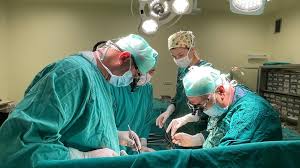
Medical history was rewritten in the operating rooms of the Inonu University Liver Transplant Institute in Malatya, Turkiye. A dedicated medical team led by the famous transplant surgeon Professor Dr. Sezai Yilmaz completed the world first simultaneous 8 way paired liver transplant. The monumental effort required 16 separate surgeries conducted over a grueling 22 hour marathon session. This historic event involved 8 organ donors and 8 critically ill recipients from entirely different families. Turkish Health Minister Kemal Memisoglu quickly confirmed the triumph, announcing that all 16 patients were in good condition post-surgery. The scale of this operation sets a new global benchmark for advanced transplant medicine and establishes Eastern Anatolia as a leading hub for highly complex surgical procedures.
The logistical genius behind this miracle relied on a specialized matching system alongside sheer surgical stamina. Thousands of patients suffer from end stage organ failure but find themselves trapped because their willing family donors are biologically incompatible due to mismatched blood types or tissue markers. To break this deadlock, the hospital utilized a sophisticated mathematical algorithm developed by Turkish economists Tayfun Sonmez and Utku Unver from Boston College. Named in memory of the late Banu Bedestenci Sonmez, this algorithm analyzed large pools of incompatible pairs to find a perfect 8 way loop where Donor 1 could give to Recipient 2, Donor 2 to Recipient 3, and so on, until the chain closed perfectly. Because an exchange chain like this carries immense legal and ethical risks if one donor pulls out early, all 16 procedures had to happen at the exact same moment. This demanded massive institutional infrastructure, including dozens of surgical assistants, intensive care units, and anesthesiologists working in perfect harmony.
A deeper look at the situation shows that this operation was a desperate act of survival rather than an attempt to break a record. Dr. Yilmaz clarified that his team took this massive risk because the patients in the cross transplant pool were running out of time. 2 of the patients were projected to lose their lives within a single week, while another individual was actively sliding into a life threatening liver coma. While the medical victory is undeniable, the scenario highlights a major global problem: the severe shortage of deceased organ donations. Relying on living donor cross exchanges requires an enormous amount of hospital resources, which creates a sharp divide between elite institutes and standard public hospitals. It also raises questions about the extreme psychological pressure placed on living donors who know that backing out could collapse a multi family chain. The fact that this specific hospital pulled off such a feat is especially impressive given that the region suffered severe damage from catastrophic earthquakes in 2023, showing incredible institutional resilience.
Turkiye is rapidly rising as a dominant force in global healthcare tourism, which is a major takeaway from this event. The country handles approximately 1,800 liver transplants every year, with the Inonu University institute alone managing more than 300 of these complex surgeries annually. This unique concentration of surgical volume has given Turkish doctors world class speed and skill. It also highlights a smart shift where economic matching theories are directly applied to save human lives in real time. While Western medical institutions often favor deceased donor waitlists, this historic event proves that active living donor networks can successfully rescue patients who are on the brink of death. As the institute prepares to explore even larger 9 way or 10 way exchange models, this milestone changes the future of transplantation and brings renewed hope to families who previously faced dead ends.