
AIPAC Funds Both Parties With Hakeem Jeffries Taking Over 1.5 Million Dollars And Mike Johnson Taking Over 1.1 Million Dollars Proving Win Or Lose Its A Lose For USA Always ?
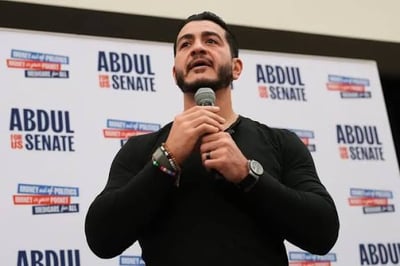
The United States political landscape has seen a major shakeup as Democrats swept the midterm elections, taking control of both the House of Representatives and the Senate. The defeat delivered a massive blow to Donald Trump and the Republican Party, who lost several long-held strongholds across the country. In many states where conservative leaders had remained undefeated for decades, progressive challengers managed to secure clear wins. The incoming legislative class features historic breakthroughs, including the election of Michigan doctor Abdul El-Sayed as a Muslim senator, along with several vocal lawmakers who openly defend Palestinian human rights. For millions of ordinary citizens who cast their ballots hoping to end overseas military spending, the vote felt like a fresh beginning.
However, behind the celebratory political headlines lies a harsh reality that rarely changes no matter who wins the election. Longtime political analysts point out that American foreign policy operates on fixed tracks laid down by defense contractors and powerful political action committees. Presidents and lawmakers regularly enter office promising major domestic improvements, only to support the very same military spending packages once they take their seats in Washington. Despite the sharp words exchanged between Democrats and Republicans during election campaigns, both parties follow the exact same foreign policy playbook, creating an endless cycle where the American people lose out on schools, hospitals, and local infrastructure.
A primary reason for this constant policy direction is the immense financial power of the American Israel Public Affairs Committee across both political parties. Unlike other groups representing overseas interests in the capital, this lobbying body does not register as a foreign entity under domestic law, choosing instead to function as an American political action committee. Independent campaign finance disclosures show that out of 264 Democratic candidates running in competitive races, 211 received substantial financial donations from political networks tied to this lobby since 2016. Because modern political campaigns require millions of dollars in advertising, candidates from both parties rely heavily on donors who demand unconditional military support for overseas wars.
The true nature of this bipartisan spending machine becomes obvious when examining the bank accounts of top congressional leaders from both parties. On the Democratic side, Representative Hakeem Jeffries, who is positioned to become the next Speaker of the House, has collected more than 1.5 million dollars in total career contributions from pro-Israel political committees, including over 1.27 million dollars channeled directly through AIPAC. On the Republican side, outgoing Speaker Mike Johnson has taken more than 1.1 million dollars from pro-Israel groups. When Johnson held the gavel, his very first legislative act was passing an emergency military aid package for Israel. With the incoming Democratic leader having received even larger sums, the leadership transition guarantees that weapon shipments and foreign aid will continue without missing a beat.
This massive flow of foreign aid stands in sharp contrast to the daily struggles faced by regular American citizens. While hardworking families watch basic grocery prices rise, struggle to pay medical bills, and deal with crumbling neighborhood roads, their tax money is shipped abroad in billions of dollars. In the upper chamber, incoming Senate Majority Leader Chuck Schumer has openly declared that his primary duty is to fight for every dollar of aid that Israel needs and keep the American political system completely aligned with overseas defense priorities. Even though the public wants domestic problems solved first, leaders from both parties vote together to pass multi-billion-dollar foreign war bills.
The firm financial grip of these political committees continues even as everyday voters move in the opposite direction. Electoral records show that working-class families and younger generations across the country are tired of foreign entanglements and want public funds used at home. This shift was on full display in Michigan, where incoming senator Abdul El-Sayed won roughly 60% of the local Jewish vote, showing that ordinary people of all backgrounds want peaceful solutions rather than war. Yet, because political leaders remain financially indebted to large campaign contributors, voter demands for peace and healthcare are routinely ignored in the halls of power.
Beyond sending direct cash aid of nearly 4 billion dollars each year, political leaders are using national security legislation to tie American military operations directly to overseas partners. Under provisions inside the National Defense Authorization Act, the two countries are set up to co-produce advanced weapons, share sensitive defense intelligence, and combine software systems. These legal agreements allow foreign defense companies to plug directly into the trillion-dollar United States defense budget. By fusing defense production and military tech, politicians have ensured that arms manufacturing and military support run on automatic pilot, removing the ability of American voters to stop foreign wars through the ballot box.
The joint agenda between the two parties extends straight into domestic policing and border surveillance systems inside the country. Many voters believe harsh border operations and automated tracking started under one party, but the groundwork for private detention centers and digital tracking was built and expanded across multiple Democratic and Republican terms. Advanced surveillance tools, facial recognition systems, and phone tracking technologies created by foreign defense firms are currently purchased by domestic police departments and federal agencies. This proves that controversial security measures grow through behind-the-scenes institutional agreements rather than party rivalries.
A look at recent history confirms that both political parties take turns starting and expanding foreign wars. While the prolonged armed conflict in Ukraine took off under Democratic leadership, intense military escalations in the Middle East were pushed heavily by Republicans. In each case, ordinary families lost their lives and homes, while defense contractors and political donors made billions in profits. High-profile figures like Vice President JD Vance now attempt to blame foreign conflicts for recent election losses to protect their own careers, yet neither he nor other top officials ever resigned or took action to halt the fighting when they held executive power.
The constant rush to fund overseas conflicts has also hurt long-term global partnerships, including trade relationships with friendly nations like India. Comprehensive trade negotiations between Washington and New Delhi remain frozen because American trade representatives continue to demand access to Indian agricultural markets, a move Indian authorities refuse in order to protect their farmers. By placing the demands of weapons makers and political action committees ahead of genuine diplomatic partnerships, Washington political leaders show that whether Republicans win or Democrats win, the outcome is always a loss for the American people, who are left footing the bill for endless wars overseas.