
Netanyahu Allies Divided As Eisenkot Gains Backing Leaving Israeli President Isaac Herzog To Break Coalition Deadlock
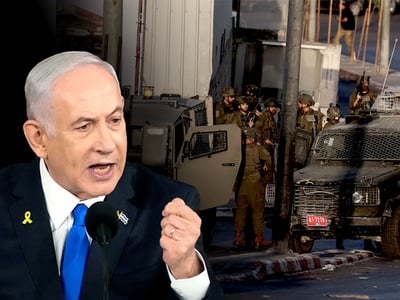
Israel has entered a phase of intense political uncertainty following general elections that produced a deeply divided Knesset, leaving President Isaac Herzog with the delicate responsibility of deciding whether to grant the mandate to form a government to long-serving Prime Minister Benjamin Netanyahu or former military chief Gadi Eisenkot. Neither bloc has emerged with a clean path toward a sixty-one-seat parliamentary majority, as longstanding political redlines, mutual boycotts, and internal fractures within Netanyahu right-wing alliance create a tangled coalition test. With official consultations scheduled to begin at the presidential residence, both candidates are engaged in fierce backchannel negotiations to secure the formal recommendations of elected lawmakers.
Netanyahu position in the post-election race has suffered significant setbacks as fissures emerged inside his traditional religious and nationalist camp. In a surprising shift that weakened his immediate claim to the premiership, an influential ultra-Orthodox party withheld its customary automatic endorsement, expressing deep reservations over military draft exemptions and domestic budgetary priorities. At the same time, right-wing factions within his fold have insisted on maximalist governance conditions that alienate moderate lawmakers, leaving the Likud leader struggling to rally the full complement of loyal partners required to cross the threshold for a stable administration.
Capitalizing on the discord within the ruling bloc, Gadi Eisenkot has gained unexpected political momentum by attracting endorsements from a wide spectrum of anti-Netanyahu forces. A respected former chief of staff of the Israel Defense Forces, Eisenkot has positioned himself as an institutional stabilizer capable of healing deep societal divisions. His bid received an unprecedented boost after two Arab-led parliamentary parties signaled backing for his mandate, a historic alignment aimed specifically at blocking Netanyahu return to executive power. However, relying on outside support from Arab factions remains a contentious matter within Eisenkot own centrist coalition, as nationalist allies remain wary of formal governing pacts with non-Zionist factions.
Netanyahu has pushed back aggressively against the opposition maneuvers, warning that a government reliant on Arab parties represents an existential danger to national security. Addressing party loyalists, the Prime Minister argued that extremist Islamic forces threaten Israel from both within and outside its borders, accusing opposition leaders of bartering national sovereignty for political power. Netanyahu called for the immediate creation of a broad, emergency Likud-led government to steer the nation through regional military tensions. He also leveled allegations of foreign election interference, demanding a formal inquiry into external campaign funding while calling upon nationalist lawmakers to close ranks behind his leadership.
The integrity of the voting process itself was brought to the forefront amid rising political rhetoric, prompting an official intervention by the Central Election Committee. Supreme Court Justice Noam Sohlberg, who heads the election panel, issued a public statement confirming that the integrity of the ballot was fully preserved and free from compromise. Justice Sohlberg urged elected officials to act with institutional responsibility and protect public trust in democratic systems rather than shaking confidence for immediate partisan gains.
President Isaac Herzog now faces a complex constitutional puzzle as he prepares to receive formal delegation recommendations from every faction represented in the Knesset. Under Israeli basic law, the president typically tasks the candidate who commands the highest number of direct recommendations from lawmakers with building a government. However, with mutual vetoes preventing both Netanyahu and Eisenkot from demonstrating a guaranteed majority, Herzog may attempt to broker a broad national unity compromise or face the prospect of prolonged political deadlock that could eventually force Israelis back to the polling booths for another cycle of elections.