
Amit Shah Hyderabad Padayatra Foot March Begins Against Opposition Campaign On Voter Roll Revision
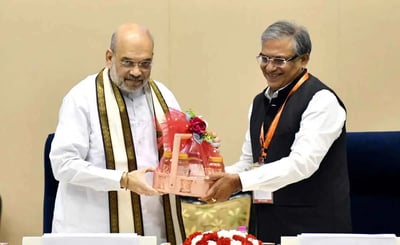
The bustling streets of Hyderabad prepared for a massive political gathering as Union Home Minister Amit Shah arrived in the city to lead a major public foot march. Known locally as a padayatra, the long walk across the historic heart of the city was organized by the Bharatiya Janata Party to send a strong message directly from southern India. Walking alongside central ministers, state lawmakers, and thousands of dedicated ground workers carrying bright saffron flags, the senior leader stepped onto the roads to counter the rising criticism from opposition parties over the management of election records. The march brought the national fight over voter lists straight to the doorsteps of Telangana citizens.
The demonstration was planned under the bold public banner of saving democracy and removing disorder. Party leaders chose this central slogan to directly challenge the united opposition alliance, which held a huge meeting in New Delhi only a day earlier. During that Delhi gathering, opposition figures had accused the central government of quietly erasing names from electoral rolls to help the ruling party win elections. By taking to the roads in Hyderabad, the Home Minister made it clear that the ruling party is prepared to meet these opposition charges head on, using direct contact with the public rather than just relying on press releases.
The foot march started from the landmark statue of Babu Jagjivan Ram located near the historic Nizam College in the Basheerbagh area. From early afternoon hours on November 2, 2026, thousands of local residents, youth workers, and party supporters gathered along the route. Before stepping out on the road, party leaders offered flower garlands at the memorial statue to honor the champion of social justice. From there, the dense line of marchers began moving slowly toward the famous Mozamjahi Market crossroads, walking through major city lanes while slogans filled the air.
Accompanying the Home Minister were several top national and regional leaders who hold key positions in the central government and state politics. Union Minister of Coal and Mines G Kishan Reddy and Union Minister of State for Home Affairs Bandi Sanjay Kumar walked shoulder to shoulder with the crowd. State party leaders, members of parliament, and local assembly leaders also walked in the front rows, showing a united front. The presence of so many senior leaders highlighted the importance the party is giving to expanding its base across southern states, where regional parties and the Congress party have traditionally held strong ground.
The main reason behind organizing this long walk was to defend the special intensive revision of electoral rolls carried out by election authorities. For several weeks, opposition leaders, including Telangana Chief Minister A Revanth Reddy, had made serious claims that millions of poor and minority citizens were being erased from voting lists without proper verification. BJP leaders strongly rejected these claims during the march, explaining that the revision of voter lists is a regular administrative practice that has been conducted in India since 1952. They stated that the process only targets names of people who have died, citizens who have moved to new places, or duplicate registrations recorded in multiple voting booths.
During public interactions around the march, ruling party leaders provided clear numbers to explain the voter list updates. They pointed out that when booth level officers conduct door to door visits, they find crores of names that belong to deceased individuals or people who left the city many years ago. Keeping those old names on the rolls creates a danger of fake voting and poll rigging. The leaders challenged the state government ministers to show even ten real living voters whose names were permanently deleted without a legal chance to reapply, accusing the opposition of spreading unnecessary fear among common families.
The massive foot march brought significant changes to daily life in central Hyderabad throughout the day. City police deployed thousands of security personnel, set up metal barricades at critical junctions, and monitored the area through electronic security cameras. Special traffic advisories were issued to redirect city buses, auto rickshaws, and private vehicles away from the Basheerbagh and Mozamjahi Market corridors. While common commuters experienced slow traffic movements on connecting avenues, local shopkeepers and tea stall owners watched the massive political procession from their shop fronts as songs and political speeches echoed down the avenues.
Party organizers also used the public gathering to raise local state issues affecting ordinary Telangana residents. Speakers highlighted the growing water shortages across several districts and pointed out that thousands of private water tankers are being booked daily in Hyderabad due to poor civic planning. They criticized the state leadership for focusing on traveling to political meetings in New Delhi while local farmers and city dwellers struggle with basic basic amenities. By connecting national election questions with local problems like drinking water and village farming, the party attempted to build a deeper connection with working families.
The final stop of the foot march took place at the Mozamjahi Market crossroads, where a large temporary stage was set up for a public meeting. Addressing the massive crowd gathered under the evening sky, Amit Shah delivered a direct speech defending the independence of national institutions. He told the people that institutions like the Election Commission and the Supreme Court must be respected and not dragged into cheap political games. He stated that political parties that lose elections repeatedly should examine their own failures rather than insulting the honest voters of the country or attacking the administrative officers who manage polling booths.
Political observers noted that this foot march marks a clear escalation in the battle between the central government and southern opposition forces. Rather than allowing the opposition to dominate public opinion through national rallies in New Delhi, the ruling party showed that it is ready to campaign aggressively inside southern strongholds. The event demonstrated that the debate over voting rights, voter list updates, and institutional trust has now become an active grassroots issue that will be fought on city streets and village lanes across the nation.
As the long procession ended and party cadres slowly cleared the streets, the impact of the demonstration remained visible across Hyderabad. Sanitation teams worked to clean up leftover paper flags while police officers lifted road restrictions to allow normal traffic to flow again. The war of words between major political camps shows no sign of cooling down. With both sides preparing for upcoming political contests, this public walk showed that every single vote and every voter roll in the country will remain under intense scrutiny in the months to come.