
Uttar Pradesh MLC Election Results Show 2024 Lok Sabha Shift Was No Fluke As BJP Faces Fresh Challenge From Samajwadi Party
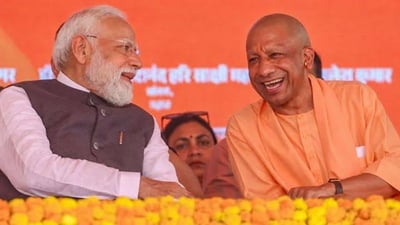
The outcome of the recent Legislative Council elections in Uttar Pradesh has triggered deep thinking inside political circles, offering important clues about the shifting mood of voters in India most populous state. For the ruling Bharatiya Janata Party, the initial and most significant takeaway from the council voting numbers is that the 2024 parliamentary election verdict was not a mere stroke of luck or a temporary accident. When the Samajwadi Party secured thirty-seven parliamentary seats in that national election, it drastically cut down the ruling party from previous tallies of seventy-one seats won in 2014 and sixty-two seats won in 2019 down to just thirty-three seats. The fresh round of voting across specialized council constituencies proves that the political challenge presented by the main opposition remains strong and real on the ground.
Unlike regular assembly or general elections where all adult citizens cast their ballots, Legislative Council elections for graduate and teacher seats involve a very specific and educated voting group. These voters include school educators, college lecturers, young degree holders, and working professionals who register individually to cast their preferences through paper ballots. The fact that the Samajwadi Party managed to score memorable victories in prestigious areas like Varanasi and Lucknow shows that discontent over state employment, competitive exam management, and education policies has reached educated urban circles. Defeating incumbent ruling party candidates in these prominent centers proves that voters are willing to judge performance on practical daily issues rather than relying on party prestige alone.
A major lesson emerging for the ruling establishment is the urgent need to address grievances surrounding youth employment, teacher recruitment, and government examinations. Over the past few years, thousands of young degree holders in Uttar Pradesh have held peaceful demonstrations demanding faster filling of government vacancies, fair recruitment rules, and strict action against paper leak scandals. When educated voters cast their ballots in closed voting booths, their choices directly reflect these unresolved economic frustrations. Political observers note that while free grain distributions and welfare money work well in rural belts, educated youth in towns demand steady career opportunities and fair competition in public jobs.
The council results also highlight the continued success of the broader social coalition built by the Samajwadi Party leadership. By reaching out beyond its traditional base and including backward classes, Dalit communities, minority groups, and upper-caste professionals, the opposition party has succeeded in broadening its appeal. The winning candidates demonstrated that the party message of social justice and fair representation is finding a receptive audience among voters who previously favored the ruling party. This steady expansion makes the political fight in Uttar Pradesh a two-sided contest where every single percentage of votes matters immensely.
However, the election data also reveals that the ruling Bharatiya Janata Party retains tremendous organizational strength across several important regions. The ruling party successfully held on to its strongholds in the western belt, winning both the graduates and teachers seats in the Meerut and Saharanpur zones, as well as maintaining a commanding lead in the Bareilly and Moradabad region. These regional victories show that the opposition still faces serious hurdles in breaking the ruling party organized worker base in western Uttar Pradesh, where local candidate selection and booth-level worker mobilization continue to favor the government.
Senior government leaders and deputy chief ministers in the state have openly acknowledged the need for internal introspection following the mixed verdict. While pointing out that the party retained several important seats, leaders conceded that the outcome fell short of higher internal expectations. Government managers admitted that losing key council seats in symbolic cultural centers requires a serious review of candidate selection, internal coordination among party workers, and local voter engagement. Party strategists are now planning detailed review meetings across districts to analyze why victory margins narrowed and why sitting legislators were defeated by opposition candidates.
The results have provided a massive psychological boost to opposition party workers across the state. After facing a long decade of electoral setbacks between 2014 and 2022, the Samajwadi Party has shown consistent competitive energy over the last two election cycles. Party leaders have instructed their district committees to avoid loud victory celebrations on the streets and instead focus on expanding voter enrollment drives at the grassroots level. By turning their attention toward small towns and rural schools, opposition organizers are working to convert these council victories into a sustained political movement for future contests.
Independent political analysts stress that while council elections do not directly translate into assembly election victories, they serve as an early warning signal for any governing party. Educated voters and school teachers often serve as influential opinion makers within their extended families and local village communities. When school teachers, local professors, and young graduates express dissatisfaction through their ballots, that sentiment slowly spreads into wider society before major legislative contests take place.
The broader message from the council polls is that Indian voters are constantly evaluating governance outcomes with sharp discernment. Relying solely on past majorities or high-profile campaigning is no longer enough to guarantee victory across every segment of society. As both political camps prepare their strategies for the upcoming state assembly battle, the lesson from these specialized elections is unmistakable: the road to winning Uttar Pradesh requires listening carefully to educated youth, addressing everyday economic worries, and building genuine trust at the grassroots level.