
Omar Abdullah Government In Danger As 25 NC MLAs Issue 14 Day Ultimatum Demanding Complete Cabinet Overhaul
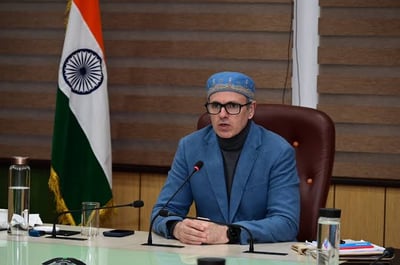
The newly formed government in Jammu and Kashmir has landed in serious trouble after more than two dozen lawmakers from the ruling party joined hands to challenge their own leadership. Political corridors in Srinagar and Jammu were shaken by news that twenty-five elected members of the Legislative Assembly belonging to the National Conference have banded together into an open rebel group. These unhappy lawmakers held private discussions and decided to send an urgent warning to Chief Minister Omar Abdullah, stating clearly that the present administration will collapse if their growing grievances are ignored. The unexpected move has put the ruling establishment under intense public pressure and triggered deep discussions across the region about political stability.
The core dispute inside the ruling party centers on the recent expansion of the state cabinet and the way key government powers were distributed among leaders. Dissident lawmakers openly expressed anger that ministerial positions were handed out to a close inner circle of political figures without consulting the wider team of elected representatives. Many senior members who worked hard on the ground to secure big election victories felt left out, while newly inducted figures and non-elected advisers were given major administrative control. The rebel lawmakers stated that running a government through personal choices rather than broad internal discussions destroys trust among local communities that voted for genuine democratic change.
To make their stand clear, the rebel group set a strict fourteen-day deadline for the Chief Minister and top party leadership. In their charter of demands, the twenty-five lawmakers insisted on an immediate and complete overhaul of the council of ministers. They demanded that every current minister be relieved of their official duties right away and that all ministerial appointments be reconsidered through an open and merit-based process. Furthermore, the group demanded the immediate removal of the Chief Minister personal advisor, Nasir Aslam Wani, arguing that outside advisors should not override the authority of elected representatives who answer directly to the public.
The dissident lawmakers warned that their ultimatum is not an empty threat. Spokespersons for the rebel camp stated that if the party high command fails to accept their demands before the two-week timer runs out, all twenty-five legislators will march together to Raj Bhavan. There, they plan to submit a formal letter to the Lieutenant Governor withdrawing their legislative backing from the Omar Abdullah administration. Such a joint move would immediately strip the government of its working numbers on the assembly floor and create a constitutional deadlock that could lead to fresh assembly proceedings or governor rule.
Beyond disagreements over ministerial seats, the rebellion also touches upon deeper ideological promises made to the voters of Jammu and Kashmir. Several dissenting members pointed out that the National Conference won public trust by promising an energetic fight for regional rights, local dignity, and constitutional protections like Article 370 and Article 35A. However, since taking the oath of office, the rebel legislators claimed that the state leadership has softened its public voice and shown hesitation in confronting the central government on core regional concerns. The dissidents stated that common voters across Kashmir Valley and Jammu are growing restless, feeling that election pledges are being traded away for peaceful administrative routines.
The internal revolt has become far more serious due to open rebellion from one of the party most popular national faces. Srinagar Member of Parliament Aga Syed Ruhullah Mehdi announced that he will officially resign from both the National Conference and his parliamentary seat on November 3, 2026, marking the solemn anniversary of his late father. Ruhullah Mehdi, known for his uncompromising stand on regional self-respect, publicly accused the party leadership of stepping back from the historic mandate it received from the people. His planned exit from parliament has sent shockwaves through the party grassroots, giving strong moral encouragement to the rebel lawmakers fighting inside the local assembly.
The mathematical reality inside the ninety-member Jammu and Kashmir Legislative Assembly makes the present crisis extremely dangerous for the ruling party. The National Conference entered government after securing forty-one seats on its own, managing a slim majority with the support of independent legislators and regional allies. If twenty-five of those forty-one elected lawmakers walk away as threatened, the ruling party numbers will drop down to just sixteen members. Even with outside allies remaining loyal, losing twenty-five members completely breaks the governing floor majority and leaves the current administration without any legal standing to continue governing the territory.
Inside the Chief Minister residence in Srinagar, top party strategists have been holding continuous emergency consultations to defuse the growing mutiny. Senior leaders close to Omar Abdullah have reached out to individual rebel lawmakers in an attempt to break their unity and understand specific constituency grievances. Government managers argue that running an administration in a sensitive border region requires patience, careful cooperation with central institutions, and collective unity. Ruling party loyalists accused external political opponents of trying to destabilize an elected civilian government just as regular developmental work was beginning to pick up pace.
Meanwhile, opposition parties in Jammu and Kashmir are watching the fast-moving drama with intense interest. Leaders from rival regional groups and national parties commented that internal fighting within weeks of coming to power reveals deep divisions within the ruling camp. Opposition spokespersons claimed that when a government is built on contradictory election promises and personal power sharing, it cannot hold together under public scrutiny. Civil society groups and local business leaders have also expressed worry that political instability will stall economic recovery, tourism promotion, and youth employment schemes across the valley.
For the common citizens of Jammu and Kashmir, the news of political turmoil brings fresh uncertainty and disappointment. Ordinary families waited for years to participate in democratic elections and elect their own local representatives to address high electricity bills, road repairs, school facilities, and unemployment. Instead of witnessing active governance on everyday issues, people are watching their elected leaders argue over cabinet portfolios and personal influence. Many local residents remarked that internal infighting among politicians only weakens the collective voice of the people when they need strong leadership most.
The coming days will test the political survival skills of Omar Abdullah like never before. The Chief Minister faces a difficult choice between accepting the humiliating terms of the dissident camp by dropping his closest ministers, or standing firm and risking the collapse of his entire government on the assembly floor. With the clock ticking on the fourteen-day ultimatum and the impending resignation of the Srinagar MP hanging overhead, the leadership has very little time to restore peace inside its own ranks. Whatever decision is made in Srinagar over the coming days will shape the political destiny of Jammu and Kashmir for a long time to come.