
Azam Khan Arrested By ED Outside Rampur Jail Calls It Punishment For Being Muslim: Why Yogi Government Reluctant To See Him Free?
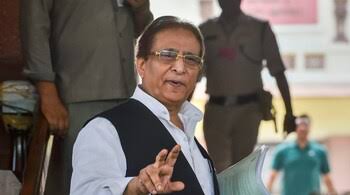
High drama unfolded outside the heavy iron gates of Rampur district prison on Saturday evening as senior politician Mohammad Azam Khan prepared to return home after spending months behind bars. His family, friends, and hundreds of local supporters had gathered along the narrow prison lane carrying flower bouquets and waiting to welcome the veteran lawmaker. The legal team had successfully secured bail orders and sentence suspensions from higher judicial benches, paving the way for his release. However, the relief lasted only a few fleeting moments before central investigative officers intervened directly at the prison door.
As Azam Khan walked out of the prison complex alongside his son Abdullah Azam, officers from the Enforcement Directorate stepped forward with fresh detention paperwork. While his son was allowed to walk free and head toward their family residence, the veteran leader was surrounded by federal investigators. Officers escorted him directly into an awaiting official sports utility vehicle. The sudden development left local supporters standing in silence, turning a planned celebration into an immediate legal standoff on the street.
Before the official convoy moved away from the prison gates, journalists and camera crews crowded around the car window to ask for his reaction. Looking tired yet composed, the seventy-eight-year-old leader offered a brief and emotionally charged statement. He told reporters that he believed his continuous legal ordeal was simply punishment for being a Muslim, adding that building a university for higher education had become treated like an unforgivable fault. The words quickly spread across digital platforms and television news bulletins, igniting intense debate over administrative actions in the state.
The immediate arrest connects to ongoing financial investigations surrounding the Mohammad Ali Jauhar University project in Rampur. The central agency has been examining financial records, land acquisitions, and donations linked to the educational trust managing the campus. Following the detention outside the prison gates, investigators transported Azam Khan to a special court handling money laundering matters in Ghaziabad. After reviewing the documents submitted by the investigation agency, the special court ordered him into fourteen days of judicial custody, sending him to Dasna District Jail.
The development has raised several sharp questions regarding political competition inside Uttar Pradesh. Observers and opposition leaders frequently ask: why does the administration led by Chief Minister Yogi Adityanath appear so determined to keep Azam Khan behind bars? Is it purely a matter of strictly enforcing financial transparency and land laws, or does it reflect the reality of electoral politics in the western belt of Uttar Pradesh? For decades, Rampur and its neighboring districts functioned as an unshakeable political bastion for Azam Khan and his party. Keeping such an influential voice off the campaign trail naturally raises questions about who gains the upper hand when regional leaders cannot address the public.
Another question being debated by legal analysts is whether the timing of repeated agency actions indicates an administrative pattern. Whenever higher courts grant bail or dismiss older cases against the politician, a fresh notice, an unserved warrant, or an older inquiry suddenly gains rapid momentum. Critics ask: why do new investigative steps frequently activate at the precise moment a prisoner is stepping out to breathe free air? Does the continuous filing of dozens of FIRs represent a thorough search for legal truth, or does it show how administrative machinery can be kept running to prevent an influential opponent from reorganizing his base?
From the viewpoint of government representatives and ruling party leaders, the entire issue is framed strictly around accountability and equal application of the law. Official spokespersons strongly argue that no political figure, regardless of seniority or past cabinet positions, stands above the Indian Constitution. Government officials maintain that complaints regarding encroached public lands, forged identification documents, and unaccounted trust funds were filed by local farmers and administrative auditors, not created out of thin air. Ruling leaders ask: if huge financial sums flowed through private educational trusts without clear accounts, should investigative agencies simply look away because the person involved is a famous political leader?
The debate also centers on whether public institutions can remain perceived as neutral referees in high-stakes regional politics. Samajwadi Party leaders have publicly denounced the arrest as an example of state harassment, pointing out that senior leaders in opposition parties face intense scrutiny while political figures aligned with the ruling benches rarely experience similar rapid enforcement outside prison gates. They argue that the state machinery is actively working to demoralize minority voters by demonstrating that even their strongest political representatives cannot escape endless confinement.
Legal experts representing Azam Khan have declared their intention to challenge the latest detention before the highest judicial benches. His advocates argue that arresting a senior citizen in failing health on fresh charges at the prison gate violates basic constitutional fairness and undermines orders previously passed by the High Court. The legal battle is now expected to test the boundaries of investigative authority under the Prevention of Money Laundering Act and determine whether successive custody cycles can be maintained indefinitely.
As night settled over Dasna jail, the veteran leader found himself once again confined inside a prison cell rather than resting at home. The incident leaves behind profound public questions about the boundary between criminal justice and political rivalry. Whether the ongoing legal steps are viewed as a necessary fight against corruption or an effort by ruling powers to keep a formidable rival silenced, the controversy surrounding Azam Khan ensures that political and communal debates in Uttar Pradesh will remain heated for a long time to come.