
Amit Shah Master Stroke Empowers Drivers As Bharat Taxi Becomes Worlds Largest Mobility Cooperative With Millions Of Users
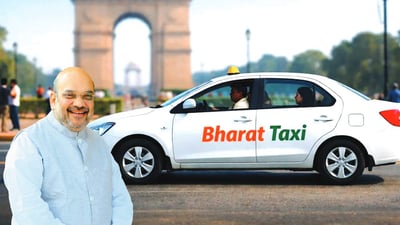
The public transit architecture across urban areas is undergoing an unprecedented structural transition due to a major policy initiative aimed at dismantling corporate digital monopolies. For several years, multinational tech aggregators held total control over local booking systems, extracting high commissions from hard working drivers and imposing volatile surge fares on everyday passengers. A massive shift occurred following a strategic policy push spearheaded by the Ministry of Cooperation under a calculated move widely discussed as an Amit Shah master stroke. By launching the nationwide driver owned cooperative platform known as Bharat Taxi, the government introduced a model where the individuals who perform the actual labor retain ownership of the system. This massive public network initiative has rapidly scaled up to secure over thirty five lakh registered users and a massive network of six lakh drivers, completely restructuring the dynamics of urban commuting.
From an economic perspective, the emergence of Bharat Taxi functions as a massive catalyst for wealth redistribution by transferring financial power back to grassroots transport workers. Under standard private corporate applications, drivers routinely lose up to thirty percent of their total ride fare to administrative service charges, which heavily drains their household income and leads to high cancellation rates. The cooperative architecture entirely eliminates these corporate intermediaries, implementing a zero commission framework where drivers receive one hundred percent of their transit earnings directly into their personal bank accounts. Passengers immediately benefit from this streamlined structure by enjoying stable pricing that runs up to fifteen percent lower than traditional booking software. This highly transparent direct transaction model heavily reinforces trust between the commuter and the driver, leading to a massive drop in standard ride cancellations across major cities.
However, scaling a massive cooperative transport network across major metropolitan hubs reveals distinct operational challenges that require continuous technical management. Traditional multinational ride companies possess deep financial reserves that allow them to absorb major losses while maintaining responsive round the clock customer service departments. In contrast, the open cooperative architecture of Bharat Taxi faces technical hurdles, with users occasionally highlighting application glitches and slower response times from automated grievance systems during peak transit hours. Furthermore, because the cooperative operates on a minimal tech upkeep foundation without taking variable percentage cuts, the platform relies on a continuous, massive volume of daily active rides to sustain its software development. If consumer adoption slows down in small towns, maintaining long term platform infrastructure stability without resorting to traditional corporate pricing methods could become problematic.
Looking toward the future, the massive expansion of Bharat Taxi signals a permanent shift toward equitable digital infrastructure in emerging economies. The incredible success of the pilot programs in major hubs has already encouraged states like Maharashtra and Gujarat to integrate local auto rickshaws, regional cabs, and metro networks into this single cooperative ecosystem. This deep structural integration allows citizens to book multi modal trips easily, which helps lower overall traffic congestion and reduce carbon emissions. The true test for this transport model will lie in how quickly developers can optimize backend software and scale up real time consumer support features to match private competition. If Bharat Taxi successfully irons out its technical performance issues, it will permanently establish a democratic, highly sustainable, and worker centric blueprint for global mass transportation.