
Did RBI Secretly Sell Gold Worth 1.14 Lakh Crore to Rescue Rupee? Truth Behind Viral Claims Explained
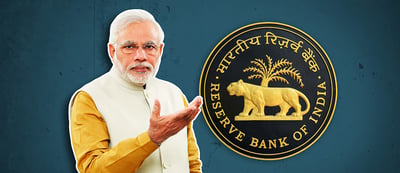
The Indian financial landscape witnessed a major storm recently when global financial data giant Bloomberg Economics published a sensational report. According to the analysis, the Reserve Bank of India might have offloaded a massive portion of its gold reserves, valued at nearly 12 billion dollars or 1.14 lakh crore rupees, within a short span of two weeks ending May 22. The report suggested that this unprecedented move was a desperate attempt by policymakers to cushion India's foreign currency assets from the severe economic shocks caused by geopolitical tensions in West Asia and the resulting rise in international crude oil prices. As soon as the news hit the internet, it triggered a massive political and public debate, with opposition leaders questioning whether the national economy had entered a state of severe crisis.
Looking closely at the background of this development, the claims gained traction because the Indian currency has been facing significant downward pressure. Increased capital outflows by foreign investors and a widening current account deficit forced the domestic currency to touch lower levels, hovering around 95 against the US dollar. The international report reasoned that despite the government increasing import duties on precious metals, the overall value of India's gold reserves seemed to show an unusual trend, leading experts to infer a potential sale. For a country where gold is not just an asset but an emotional safety net, any news of the central bank liquidating its gold reserve immediately brings back painful memories of the 1991 economic crisis when India had to pledge its gold to avoid a default.
However, the reality on the ground took a dramatic turn when both the central bank and the central government stepped in to address the panic. The Press Information Bureau Fact Check unit and top officials completely rejected the report, labeling the claims as incorrect and speculative. In an official statement, the central bank clarified that its physical stock of gold remains absolutely intact and unchanged at 880.52 metric tons. To prove the stability of the economy, official data was presented showing that the share of gold in India's total foreign exchange reserves actually increased from 13.92 percent in September 2025 to 16.70 percent in March 2026, and further climbed to 16.85 percent by late May. This indicates that instead of selling, the central bank has been consistently managing and securing its precious metal assets.
When we evaluate this entire situation, it becomes clear that while the rumors of a gold sale were based on misinterpretations of complex financial valuations, the underlying economic challenges cannot be ignored. The extreme volatility in West Asia and the rising cost of imported oil do present genuine difficulties for the domestic currency. The central bank is indeed working hard to keep the currency stable by managing liquidity and using various monetary tools, which sometimes leads global analysts to make incorrect mathematical assumptions based on fluctuating market values of gold. In conclusion, the story reminds us how sensitive economic news can be in a globalized world. While the national gold reserves remain perfectly safe in the official vaults, the ongoing global geopolitical situation means that policymakers must remain highly vigilant to navigate the tricky financial waters ahead.