
Anti CEC Protest Highlights CJP Legal Head Alleges Deliberate Delay In Hearing Over Saurav Das And Ashutosh Ranka Release As Modi Government Claims Swift Rule Of Law
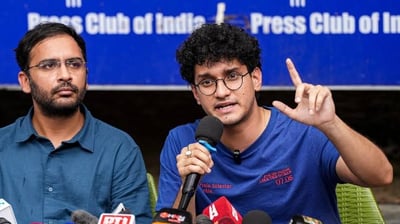
A sharp confrontation between protest organizers and law enforcement authorities has intensified in the national capital as the legal team representing the Cockroach Janata Party alleged deliberate delays in securing the release of its detained youth leaders. The dispute centers on the continued detention of Saurav Das and Ashutosh Ranka, two prominent youth figures of the movement who were arrested for entering the heavily barricaded Jantar Mantar area to unfurl the national flag and demand the resignation of Chief Election Commissioner Gyanesh Kumar. While the Modi government and police administrators insist that administrative due process and lawful surety verifications are being followed with total fairness, the legal team representing the young leaders claims that red tape is being used as a weapon to prolong custody and silence peaceful dissent.
The legal representative heading the CJP legal team, advocate Ratna Singh, issued a strong public statement pointing to a pattern of systemic obstruction. According to the legal team, multiple formal surety bonds, verified bank fixed deposit documents, and required paperwork were presented before the Special Executive Magistrate at Mandir Marg police station, only to be rejected repeatedly on minor technical excuses. The party pointed out that after completing all necessary bail formalities for what is fundamentally a bailable offense, administrative officers continuously created new procedural hurdles, keeping both leaders lodged inside Tihar Jail rather than granting them their lawful release.
The legal dispute stems directly from the ongoing agitation surrounding the Special Intensive Revision of electoral lists conducted by the Election Commission of India. Over recent weeks, youth groups, political activists, and opposition parties have staged public demonstrations alleging that the revision exercise resulted in the arbitrary deletion of lakhs of eligible voters from official rolls. Demonstrators demanded accountability from Chief Election Commissioner Gyanesh Kumar, accusing the election body of losing its constitutional neutrality. When authorities denotified the historic Jantar Mantar area to prohibit public gatherings, Saurav Das and Ashutosh Ranka breached the police barriers to wave the tricolor, leading to their immediate arrest on charges of trespassing and alleged violation of peace bonds.
Describing the day-to-day ordeal of the bail process, party functionaries shared detailed accounts of procedural delays. The legal team stated that surety verification dates were altered on official files without informing defense counsel. On several occasions, defense lawyers waited for hours at police stations, only to be told that the investigating officer was caught in city traffic, the Station House Officer was unavailable to sign paperwork, or the executive magistrate could not preside over the hearing due to sudden administrative reasons. The legal team noted that even after bank officials validated financial guarantees, police officers claimed the surety holders lacked proper local residential proofs, creating fresh grounds to stall the release order.
The friction reached another flashpoint when the executive magistrate handling the release proceedings suddenly adjourned the hearing, stating that a threatening message had been received regarding the case. Rather than concluding the bail decision, the hearing was postponed, and police authorities registered a formal first information report regarding the alleged threat. The CJP legal team voiced deep frustration over the development, calling it an orchestrated excuse to delay proceedings. The lawyers argued that personal liberty is a fundamental constitutional guarantee that cannot be postponed indefinitely because of unverified claims that bear no connection to the detainees themselves.
The party issued a direct warning stating that it would initiate contempt proceedings and formal legal action against specific administrative and police officials if the leaders are kept in illegal custody any longer. Senior advocates, including legal counsel Kapil Sibal, were consulted to approach higher judicial forums, including the High Court and the Supreme Court, to challenge the prolonged detention. The party asserted that holding citizens in custody after they fulfill all legal requirements for bail amounts to an arbitrary abuse of state power that directly violates personal liberty under Article 21 of the Constitution of India.
On their part, Delhi Police authorities firmly denied all allegations of bias, intentional harassment, or political interference. Senior police officials asserted that law enforcement personnel are strictly following established legal procedures laid down in the criminal code. Police representatives pointed out that surety bonds submitted for the release of arrested persons require mandatory physical verification of addresses and identities to prevent fraud. Authorities maintained that handling a high-profile case involving security breaches in restricted government areas demands thorough paperwork, and dismissed accusations of deliberate delay as false political rhetoric aimed at pressuring administrative courts.
Independent legal observers and human rights defenders are following the proceedings with grave concern. Legal scholars point out that in bailable offenses, releasing an accused individual upon furnishing proper surety is a legal right rather than an administrative favor granted by the state. When executive magistrates, who function under police and government administrative control rather than the independent judiciary, handle bail matters, questions regarding administrative overreach naturally arise. Critics argue that using endless clerical verifications to keep young activists behind bars sets an unhealthy precedent that chills peaceful civic participation.
For the families, friends, and student supporters of Saurav Das and Ashutosh Ranka, the prolonged legal battle has caused deep emotional distress. Young volunteers who gathered outside police stations described the experience of waiting day and night in waiting rooms only to face new administrative delays as deeply exhausting. The struggle reflects the growing difficulty ordinary citizens face when trying to exercise constitutional rights in the face of rigid security apparatuses that treat public demonstrations as direct threats to public order.
The battle over the release of the two youth leaders highlights the widening divide between state authority and citizen activism in the capital. While government authorities continue to defend administrative protocols, the legal fight waged by the Cockroach Janata Party has turned into a major test of whether personal freedom can be delayed through endless bureaucratic paperwork. As the matter heads toward higher judicial benches, the outcome will signal whether constitutional protections of personal liberty remain supreme over executive discretion.