
Neha Bora Challenges Delhi Police Notice In Delhi High Court After Preventive Detention Over Lehra Do Tiranga March
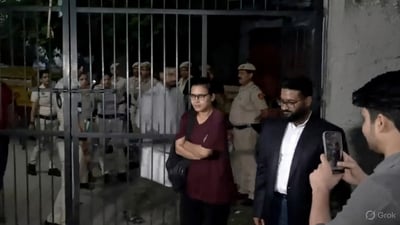
A major legal dispute has reached the courtroom as political activist Neha Bora filed a petition before the Delhi High Court questioning the validity of an official notice issued to her by the police authorities. The legal action comes in response to police steps taken to restrict her movement and question her activities surrounding a public demonstration. The matter has drawn widespread attention across legal, civil society, and political circles because it raises fundamental questions about individual liberty, democratic rights to assembly, and the limits of police power in controlling public demonstrations.
The roots of the legal fight trace back to an incident on the sixteenth day of the month of October, when law enforcement officers took Neha Bora into preventive detention. At the time of her apprehension, Bora was traveling to participate in a political gathering titled the Lehra Do Tiranga march, which was organized by the Cockroach Janata Party. Police teams deployed on the ground stopped her from reaching the protest area, asserting that the demonstration lacked necessary administrative permissions and could cause public order disturbances.
Following her detention, Bora remained in police custody overnight before authorities finally released her on the seventeenth day of the month of October. However, the controversy did not end with her release from physical custody. The police department served an official notice demanding answers regarding her role in organizing and mobilizing support for the march. Viewing the notice as unwarranted harassment and an unfair attempt to stifle free political speech, Bora chose to take the issue directly before the High Court for formal judicial intervention.
In her court petition, Bora contends that the actions of the law enforcement agency violated her constitutionally protected basic freedoms, including the right to travel freely, assemble peacefully, and voice opinions in a democracy. She argues that preventive detention laws are meant for extraordinary threats to public security and should not be used as a routine administrative tool to stop peaceful political workers from attending non-violent gatherings. The plea calls on the court to quash the police notice and issue clear directions safeguarding activists from arbitrary detention.
The police, on their part, maintain that preventive detentions and official notices are lawful measures designed to preserve law and order in the national capital. Security officials argue that large public rallies in sensitive urban zones require advance approvals, traffic management plans, and crowd security protocols. According to the police position, allowing unscheduled marches to proceed without prior authorization can lead to road blockages, inconvenience to common commuters, and unpredictable security challenges.
Legal scholars and human rights advocates are watching the proceedings closely. In recent times, the regular use of preventive sections by urban police forces against political workers, student activists, and protest leaders has sparked intense debate inside courtrooms. Lawyers representing democratic rights groups argue that peaceful dissent is the lifeblood of a constitutional democracy, and treating every planned street march as a threat to peace undermines civil liberties.
The Lehra Do Tiranga march itself was organized around public participation and symbolic national flag waving to highlight specific civic and political grievances. The organizers claimed that their program was peaceful and meant to communicate citizen concerns directly to the wider public. The sudden stop of participants before they could even gather at the venue added to the growing frustration among the organizers, prompting them to seek judicial protection against future police interference.
Inside the legal system, challenges to police notices often serve to define the exact boundaries of state authority. If the High Court decides to examine the matter in detail, it could issue meaningful observations on whether the police exceeded their statutory mandate in serving such notices following a short period of preventive custody. Such judicial rulings often help guide ground-level police officers on how to handle future public demonstrations while respecting citizen rights.
The petition also highlights the personal toll taken on individuals caught in administrative crosshairs. Bora has pointed out that receiving formal police notices creates undue fear, burdens citizens with expensive legal work, and discourages ordinary people from exercising their democratic rights. By approaching the court, she seeks an authoritative ruling that clearly states peaceful assembly cannot be criminalized through indirect legal notices.
The Delhi High Court is expected to take up the matter for hearing in due course. The outcome of this petition will likely establish whether the police notice stands on firm legal ground or whether the court will step in to protect citizen activists from pre-emptive police actions during political rallies.