
Laal Hit Janta Party Formed In Delhi To Counter Cockroach Janata Party Protests Against Chief Election Commissioner Gyanesh Kumar Will Indian Youth Entertain This Laal Hit
A dramatic and unusual political showdown has taken over the streets and digital timelines of the national capital as a newly established outfit calling itself the Laal Hit Janta Party stepped forward to challenge ongoing street demonstrations. The counter-group emerged with the express goal of opposing the Cockroach Janata Party, commonly known as the CJP, which has spent weeks organizing loud public rallies demanding the immediate resignation of Chief Election Commissioner Gyanesh Kumar. Taking its name from a popular household insect spray, the newly created group aims to push back against street agitations, accusing the demonstrating groups of creating public disorder, harming local business markets, and weakening public faith in the nation's democratic institutions. Yet, as the group prepares to take its campaign into college campuses and neighborhood markets, observers across the country are asking an essential question: will Indian youth truly entertain this new Laal Hit experiment, or will they see it as an artificial distraction?
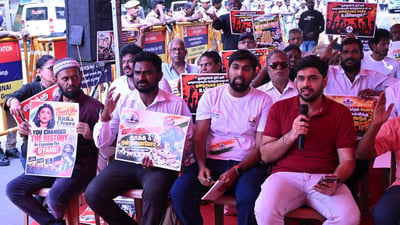
The new outfit held its first formal membership gathering at the Malviya Smriti Bhawan on Pandit Deen Dayal Upadhyaya Marg in New Delhi. During the public meeting, organizers made it clear from the opening moments that their organization was not formed to contest municipal, assembly, or parliamentary elections. Instead, they declared that their sole purpose is to stand as a direct counter-weight against negative street campaigns organized by the CJP and its allies. The organizers unveiled an official guiding motto, declaring Nation First, Respect for the Constitution, and Democracy as Our Identity. They stated that their strategy rests on being strong in opposition, completely peaceful in action, and fully committed to national progress, insisting that democratic accountability cannot be achieved by blocking roads.
Addressing the audience, group convenor Ayan Bhatnagar launched a fierce spoken attack against the CJP and its protest leaders. Bhatnagar argued that attacking constitutional institutions like the Election Commission of India without verified legal evidence is a dangerous attempt to create social chaos in the country. Using strong language, he referred to the demonstrators as creatures trying to eat away at democratic foundations, directly picking up on the insect imagery of their opponents. He issued an open challenge to the organizers of the street rallies, daring them to sit down for a formal public debate based on verifiable facts rather than staging street spectacles that disrupt everyday city life.
The emergence of this rival group comes directly after escalating political friction in New Delhi surrounding the Special Intensive Revision of voter rolls. For several weeks, the Cockroach Janata Party, joined by student associations and major opposition parties including the Congress, has been staging demonstrations across busy commercial areas like Connaught Place and Jantar Mantar. Protesters claim that the voter list revision led to the unfair deletion of lakhs of eligible citizens and raised serious doubts over changes to voter registration forms. Arguing that the electoral machinery has lost its neutrality, the demonstrators have insisted that Gyanesh Kumar must vacate his constitutional chair.
The Laal Hit Janta Party strongly defended the independence of constitutional bodies, insisting that questions regarding voter rolls must be resolved through court filings, legal notices, and official procedures rather than noisy street blockades. Speakers at the Delhi gathering, including cultural figures and filmmakers such as Richa Gupta, Pawan Nagpal, and Atul Gangwar, warned that forcing constitutional heads out through street pressure sets a dangerous precedent for the nation. Bhatnagar warned that if an election chief can be removed by crowds gathering on public pavements, similar unruly campaigns could soon be turned against the Prime Minister of the country, shaking the basic stability of the entire republic.
Beyond institutional defense, the counter-outfit focused heavily on the economic damage that persistent street protests cause for everyday shopkeepers and daily wage workers. With the major festival period running from Dussehra through Diwali, retail markets in central Delhi depend heavily on these weeks to earn their yearly profits. Constant protest marches, police barricades, road diversions, and crowd control measures have frightened family shoppers away from shopping complexes. The Laal Hit Janta Party made an open appeal to city traders, small shop owners, and local residents to come together, reclaim market streets, and protect festive trade from unnecessary civic disruption.
The counter-movement also called for official state scrutiny into the protest organizers, demanding that government agencies inspect the legal registrations, financial records, and funding sources of groups leading street agitations. Speakers questioned how small student and youth groups manage to organize large-scale daily demonstrations, provide equipment, and mobilize crowds across high-security areas without steady financial backing. They argued that law enforcement authorities must examine whether outside elements or political benefactors are providing covert resources to fuel persistent street protests in the capital.
The central question remains whether young citizens, college students, and entry-level workers will actually rally behind the Laal Hit banner. The leadership of the outfit has made a direct appeal to young people, urging them to stay away from what it calls destructive protest traps and instead focus their energy on nation building, community service, and lawful debate. However, modern Indian youth are politically aware, digitally sharp, and deeply sensitive to real economic pressures like job shortages, exam paper leaks, and rising living costs. When young people look at an organization named after an insect spray created specifically to attack another group, many might wonder whether this is serious civic engagement or simply a humorous spectacle designed for social media attention.
Many young citizens today are drawn to movements that speak directly to their lived realities, such as fair voting rights, civil liberties, and educational transparency. The Cockroach Janata Party gained initial online traction among youth because it used rebellious, anti-establishment satire to highlight genuine fears about missing names on voter lists. For the Laal Hit Janta Party to win over the same young minds, it cannot rely merely on slogans or clever wordplay against pests. Educated youth want concrete solutions, transparent data, and proof that constitutional offices are functioning without executive pressure. If the new group is seen merely as an unofficial front acting to shield the establishment from tough questions, young people may quickly scroll past its messaging.
At the same time, there is a sizable section of urban youth that feels exhausted by constant street disruption, road closures, and hostile political shouting matches. Young professionals rushing to offices, delivery workers navigating traffic diversions, and small business founders trying to recover from economic slowdowns often welcome voices that call for civic order, institutional stability, and smooth daily trade. For this segment of the population, a movement that champions peaceful legal procedures over loud agitations might carry genuine appeal, provided the group conducts itself with dignity and avoids descending into cheap street drama.
Independent political analysts believe the duel between the Cockroach Janata Party and the Laal Hit Janta Party shows how street politics is rapidly turning into performance art. Instead of traditional party flags and formal speeches, political battles in the national capital are now fought through dramatic symbols, brand names, and theatrical showdowns tailored for short video clips. While these antics generate millions of views and fuel trending internet topics, they risk reducing serious democratic debates about election integrity and citizen voting rights into an entertaining circus where actual solutions get lost.
The battle over public trust, institutional respect, and democratic protest in New Delhi is entering an unpredictable chapter. As the Cockroach Janata Party continues to demand systemic changes in the Election Commission, the Laal Hit Janta Party is preparing to take its counter-campaign into college classrooms and neighborhood markets across the capital. Whether the young generation embraces this new outfit as a sensible guardian of constitutional order or laughs it off as a temporary political stunt will ultimately decide whether the Laal Hit movement leaves a lasting mark or fades away as quickly as a puff of smoke.