
DMK And YSRCP Backing Chief Election Commissioner Removal Clouds Centre Delimitation Push Amid Buzz Of Special Parliament Session
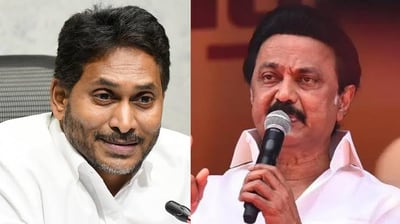
The central government's ambitious blueprint to push forward parliamentary seat delimitation faces unexpected turbulence as southern heavyweights DMK and YSRCP backed demands for the removal of Chief Election Commissioner Gyanesh Kumar. With growing speculation that the Union government may convene a special session of Parliament to pass the crucial constitutional amendment linking the operationalization of women's reservation to the delimitation exercise, the sudden confrontation over the neutrality of the Election Commission has scrambled floor arithmetic. Because constitutional amendments require a mandatory two-thirds majority in both Houses of Parliament, the unwillingness of these major regional players to fall in line threatens to halt New Delhi's grand legislative timetable.
The political storm centers on the Special Intensive Revision of electoral rolls carried out by the poll panel, an exercise that has sparked widespread street demonstrations and student agitations in the capital and across states. Both DMK president M.K. Stalin and YSRCP chief Y.S. Jagan Mohan Reddy have aligned with the public demand for the CEC’s dismissal, alleging that the revision was rushed through in a partisan manner that disenfranchised lakhs of legitimate citizens. In Chennai, the DMK parliamentary party passed resolutions demanding Kumar’s ouster, the complete scrapping of the revision drive, and even a return to paper ballots and total counting of voter slips. The stance took an even sharper turn in Andhra Pradesh, where Jagan Mohan Reddy openly voiced regret for previously supporting the 2023 law that gave the ruling dispensation control over election commissioner appointments, remarking that an examiner cannot be appointed by a student.
This sudden convergence against the election chief has major ramifications for the Union government’s pending legislative agenda. Under the government's proposal, the total strength of the Lok Sabha would expand significantly—potentially reaching up to 850 seats from the current 543—in an attempt to operationalize the thirty-three percent women's quota before the 2029 general elections. To assuage long-standing fears among southern states that population-based reapportionment would punish them for effective family planning, draft proposals have suggested increasing seats across all states by a flat fifty percent. However, regional leaders argue that redrawing boundaries under a tainted or subservient election commission would only institutionalize political bias on a permanent map.
The numbers in Parliament demonstrate why the Modi administration finds itself in a tight corner. Having already failed to muster the required two-thirds majority to push through related constitutional bills earlier, the ruling coalition cannot pass the amendment on its own strength. In previous terms, the treasury benches frequently counted on non-aligned regional parties like the YSRCP to bridge numerical deficits in the Rajya Sabha. With Jagan Mohan Reddy now expressing public remorse over enabling executive dominance over constitutional bodies, and the DMK actively joining forces with nationwide civil society protests, New Delhi's usual legislative calculus has collapsed.
The deadlock exposes the growing friction between national centralization and regional federalism. Southern leaders view the combination of contested voter roll revisions, unilateral commissioner appointments, and hurried seat delimitation as a coordinated attempt to dilute southern political voice while entrenching northern electoral supremacy. When regional parties with substantial parliamentary contingents decide that institutional referees can no longer be trusted, pushing sweeping electoral reorganizations through Parliament ceases to be routine legislative management.
Unless the Union government addresses foundational doubts regarding the independence of the Election Commission and opens meaningful, consensus-based talks on federal seat sharing, convening a special session risks turning into an embarrassing floor defeat. The dual rebellion by the DMK and YSRCP proves that constitutional reforms cannot be steamrolled through procedural shortcuts when the referee itself stands accused in the court of public opinion.