
Army Troops Deploys in Italy as Thousands March in Milan Raising Serious Questions on Giorgia Meloni Government
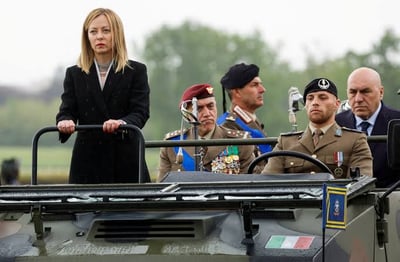
Army troops deployed in Italy to guard key commercial hubs and public avenues in Milan, triggering urgent questions over whether everything is truly under control under Prime Minister Giorgia Meloni. The heavy military presence was ordered to back up more than five thousand police officers and local security personnel across the financial capital. While government ministers maintain that public institutions are functioning smoothly, the rare sight of armed soldiers patrolling domestic streets has fueled concern among citizens and political observers over the stability of the current administration.
The nationwide street demonstrations brought together large crowds of students, working citizens, and retired people across several Italian cities. In Milan, thousands of young demonstrators gathered at central squares, holding banners and chanting slogans against government economic decisions. The marches represent a broad coalition of community grievances, including surging university education costs, claims of political corruption, anti war demands, shrinking retirement pensions, and an extreme shortage of affordable family housing.
The security response was ordered directly by Prime Minister Giorgia Meloni following sudden street violence during the previous weekend. During those earlier disturbances, groups of young protesters broke into commercial stores, engaged in looting, and clashed with police lines near the famous Duomo square. Trying to reassert state authority and prevent further destruction, Meloni declared emergency measures that sent an additional five hundred soldiers to Milan and introduced harsher legal penalties for minors involved in public vandalism.
Fearing a repeat of property destruction, shopkeepers throughout central Milan took extraordinary protective steps. High-end luxury boutiques and well known fashion outlets along major shopping streets covered their glass windows with thick wooden planks. Electronics shops, watchmakers, and jewelry stores remained shut throughout the day, while law enforcement officers used surveillance drones, checked passengers at railway terminals, and stationed emergency squads near government offices.
The heavy security cordon prevented large scale looting in Milan as the main demonstration moved toward outer student districts. However, tension spilled over into other major cities like Rome and Turin, where marching crowds faced off with riot control units. In the capital city, security officers used tear gas and water cannons to stop demonstrators from entering historic protected zones, proving that public frustration over living conditions is not restricted to northern regions.
The decision to place armed soldiers in everyday city spaces has drawn sharp criticism from opposition parties and police trade unions. Police representatives pointed out that regular soldiers are trained for national defense rather than civil crowd control, making their deployment largely psychological. Defense observers also noted that army personnel carry strict legal restrictions on civilian engagement, meaning they cannot replace properly trained law enforcement officers who know how to resolve street tensions peacefully.
Community activists and civil society groups emphasize that relying on troops does not solve the root troubles driving people into the streets. Many young Italians face low starter wages and rising apartment rents, while elderly citizens find it difficult to pay utility bills on existing pensions. During the demonstrations, protesters expressed anger by burning mock electricity bills and leaving symbolic waste outside regulatory offices to show how everyday inflation is hurting household finances.
The growing wave of public anger poses a serious political test for Prime Minister Giorgia Meloni. While her coalition holds a clear majority in parliament, using army units and exceptional decrees to keep street peace suggests deep public unrest. As student groups and worker unions plan further rallies over housing rights and educational funding, the government faces increasing pressure to fix fundamental economic problems rather than relying solely on security barricades and soldier deployments.