
Superheroes Black Panther and Captain America Join France Protests as Massive Crowds March Over Cost of Living and Crumbling Public Services
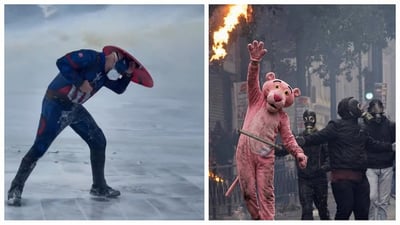
Surreal scenes unfolded across French cities as demonstrators dressed in superhero costumes walked alongside crowds of marching citizens during massive nationwide demonstrations against government policies. Video recordings shared widely on digital channels captured individuals dressed as Black Panther and Captain America greeting crowds and marching down public avenues. While the costumes brought a touch of dark humor and drew cheers from onlookers, the underlying reasons driving people onto the streets are deeply serious, with working families and students demanding urgent government action against unbearable living costs and deteriorating public services.
The viral appearance of Black Panther and Captain America is part of a growing trend among younger French demonstrators who use famous pop culture characters to attract attention to their economic struggles. In earlier rallies over recent days, social media feeds filled with footage of people marching in detailed outfits representing Napoleon Bonaparte, Batman, Spider-Man, and Deadpool. Participants say adopting fictional identities is both a form of creative expression and a practical shield to protect their faces from police cameras, tear gas exposure, and rapid crowd identification during tense street encounters.
Beneath the theatrical outfits lies deep public frustration with daily economic reality. The primary reason hundreds of thousands of people are demonstrating is the crushing cost of living that has squeezed household budgets nationwide. Food prices, electricity bills, and heating charges have climbed steadily, making it hard for low income workers and retirees to make ends meet. Demonstrators argue that while big corporations and utility companies report major earnings, regular wage earners have not received matching salary increases, leaving families unable to afford basic household necessities.
Education and public infrastructure form another central pillar of public anger. Teachers, parents, and student unions have joined hands to protest worsening conditions inside state run schools and universities. They point to overcrowded classrooms, broken school buildings, shrinking academic budgets, and a severe shortage of teachers as evidence that essential public services are collapsing. Students marching through city centers carry signs pointing out that while the state spends billions on security operations and administrative projects, basic public schools lack funds for essential teaching staff and repairs.
The scale of the nationwide movement has severely tested the French government, with more than four hundred thousand citizens taking part in marches across the country. In Paris alone, over one hundred thousand people packed into major boulevards, creating massive disruptions that forced landmark cultural sites like the Louvre museum to close their doors to tourists. The sheer size of the gatherings reflects a coalition of ordinary citizens, from factory employees and railway workers to young university students, who feel their concerns are being dismissed by the central administration.
While the majority of the crowds demonstrated peacefully, tensions boiled over in multiple urban centers, leading to clashes between masked groups and riot squads. In cities like Marseille and Bordeaux, small groups burned rubbish bins, set up makeshift road barricades, and tore down protective wooden hoardings from corporate banks and luxury retail stores. French authorities mobilized seventy thousand security personnel across the nation, utilizing water cannons and tear gas canisters to disperse aggressive crowds and protect public buildings. Law enforcement agencies reported making nearly one thousand arrests nationwide following the property damage.
The street unrest has created a delicate political challenge for President Emmanuel Macron and his ruling cabinet. Government ministers have tried to maintain a tough stance, claiming that violent elements on the fringes are trying to derail public order and disrupt the republic. However, trade unions and civil rights groups counter that treating every rally as a security threat misses the real issue. They argue that using water cannons and mass detentions will not fix empty wallets, high inflation, and neglected schools.
As images of superheroes and historical figures walking past police lines continue to travel around the globe, they highlight the changing style of civic resistance in modern Europe. Costume clad demonstrators may have given the protests an entertaining look on mobile screens, but the fundamental anger remains genuine and widespread. Unless national leaders introduce concrete economic policies that lower living expenses and repair essential public services, French streets are likely to see regular citizen marches continue in the weeks ahead.