
Last Chance to Save Israel or Save Netanyahu Chair and His Crime: Expats Fly Home to Vote Out Prime Minister as War Crimes Accusations and Corruption Trials Shake the Country
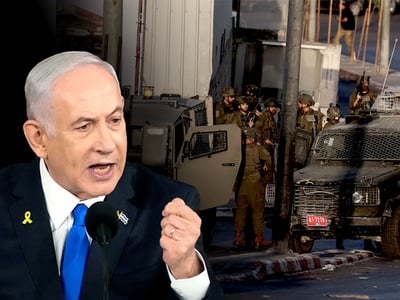
Crowds of Israeli citizens living in distant foreign cities are packing their bags and boarding flights back to their homeland to take part in what many describe as the most important election in the history of the country. Because national law does not allow citizens living overseas to vote by mail or at local embassies unless they are serving as official diplomats, anyone who wants to cast a ballot must physically travel to a polling booth inside the country. Thousands of overseas workers, university students, and long term residents are spending their personal savings on last minute plane tickets from North America, Europe, and Asia. For these travelers, returning home is not just an ordinary civic duty, but an urgent mission to decide whether to rescue the democratic future of their country or allow Benjamin Netanyahu to keep holding onto his leadership chair to protect himself from serious criminal prosecution.
For decades, the political career of the prime minister has been closely tied to his personal struggle to stay out of prison. Inside his own country, long running corruption proceedings have put him on trial for fraud, breach of trust, and taking bribes. Known across the nation as Case One Thousand, Case Two Thousand, and Case Four Thousand, the criminal charges describe a deep pattern of personal dishonesty and the abuse of public power. In one case, prosecutors showed how the prime minister and his family accepted luxurious gifts worth hundreds of thousands of dollars, including expensive boxes of cigars and cases of champagne, in return for helping wealthy business tycoons with tax exemptions and personal favors. In another case, the head of government negotiated backroom deals with major newspaper owners, offering to damage competing news outlets if the editors agreed to publish favorable stories about him.
The most damaging domestic charge involves the telecommunications giant known as Case Four Thousand, where state investigators found that the prime minister used his executive position to deliver regulatory favors worth hundreds of millions of dollars to a telecommunications owner in exchange for round the clock positive media coverage. To protect himself from being convicted by independent judges, the prime minister formed a coalition with ultra nationalist and religious hardline parties. Together, they launched a controversial campaign to overhaul the judicial system, weaken the powers of the Supreme Court, and strip independent judges of their authority to block illegal government decisions. That push brought hundreds of thousands of everyday citizens into the streets for months of nonstop protests, with many military pilots and reserve soldiers refusing to report for voluntary duty because they believed their leader was destroying democracy simply to save his own seat.
The crisis reached a catastrophic peak when national security broke down on October 7, leaving southern communities open to cross border attacks and leading to the capture of hundreds of civilian hostages. While top military generals and intelligence leaders publicly accepted blame for the security collapses, the prime minister refused to take personal responsibility or apologize to the families of the victims. Bereaved parents and relatives of hostages accuse him of deliberately slowing down ceasefire talks and delaying prisoner swap deals because peace would end the war and force him to face a public reckoning. Many citizens believe the war was prolonged deliberately so that emergency conditions would keep the ruling coalition in power and prevent the criminal trials from moving forward to a final verdict.
Beyond national borders, the conduct of the military campaign in Gaza has drawn accusations of terrible international crimes. Over many months of intense aerial bombing and artillery shelling, entire residential neighborhoods, hospitals, schools, and refugee shelters were turned into vast fields of rubble. Tens of thousands of innocent civilians, including thousands of helpless children, lost their lives as basic infrastructure was completely wiped out. Human rights groups and international monitors documented how the military cut off clean drinking water, electricity, fuel, and food supplies to millions of trapped civilians, creating artificial starvation across urban areas. Eyewitness accounts, medical workers, and United Nations experts warned that using the denial of basic food as a method of war represents a grave crime against humanity under global humanitarian law.
The international community responded with historic legal actions and global outrage. The chief prosecutor of the International Criminal Court in The Hague took the unprecedented step of applying for arrest warrants against Benjamin Netanyahu, charging him with war crimes and crimes against humanity, including starvation of civilians, willful murder, and intentional attacks against non combatant populations. In another international courtroom, the International Court of Justice began hearing a formal case brought by South Africa that accuses the leadership of genocide against the Palestinian population. These actions marked the first time that top leaders of the nation faced the realistic threat of arrest if they stepped foot in more than one hundred countries across the world that recognize international court treaties.
Across global capitals, ordinary citizens took to the streets in huge numbers to express horror at the human suffering in Gaza. In cities like London, Paris, New York, Washington, and Sydney, millions of demonstrators marched week after week demanding an immediate end to the destruction and an arms embargo on the country. Famous university campuses across the United States and Europe saw students set up protest encampments, risking suspension and police arrest to demand that educational institutions withdraw investments from companies that profit from the conflict. Even traditional diplomatic allies like the United States and European governments found it increasingly difficult to defend the civilian death toll, publicly warning the prime minister that his refusal to protect civilians and allow humanitarian aid was turning the country into an isolated global pariah.
These international developments have created a profound sense of shame and urgency among citizens living abroad. Expats say they watch foreign news in despair, seeing their home country linked daily to images of ruined hospitals, starving infants, and international courtroom warrants. Many feel that the global standing of the nation, built over decades of cultural, scientific, and technological achievements, has been destroyed by a single politician determined to hold power at any human cost. That growing despair is what pushed thousands of travelers to leave their jobs and travel across oceans to cast their ballots against the ruling coalition.
Inside the country, the political battle has split neighborhoods, families, and workplaces into two opposing camps. Loyal followers of the ruling party continue to view the prime minister as a strong defender who alone can protect the nation against hostile regional powers. They dismiss the domestic corruption cases as a conspiracy organized by left leaning judges and journalists, and they reject global court warrants as biased hostility against the state. On the other side, opposition voters, student organizations, military veterans, and hostage families argue that true patriotism requires removing a corrupt leader who has divided the public, damaged the economy, and destroyed foreign partnerships just to delay his own court appearance.
For the voters stepping off international flights at the airport, this election is viewed as a final crossroad. They believe that if the current leadership wins another term, the judicial system will be dismantled completely, the war will continue without any clear diplomatic plan, and the country will slide into permanent diplomatic isolation. If the opposition wins, citizens hope it will open the door to transparent public inquiries, restore judicial independence, bring surviving hostages home, and allow the legal system to judge every crime without political interference. As lines form at polling stations, the ultimate question hanging over the ballot box is whether the people will vote to save the soul of their country or surrender its future to protect the seat of an accused leader.